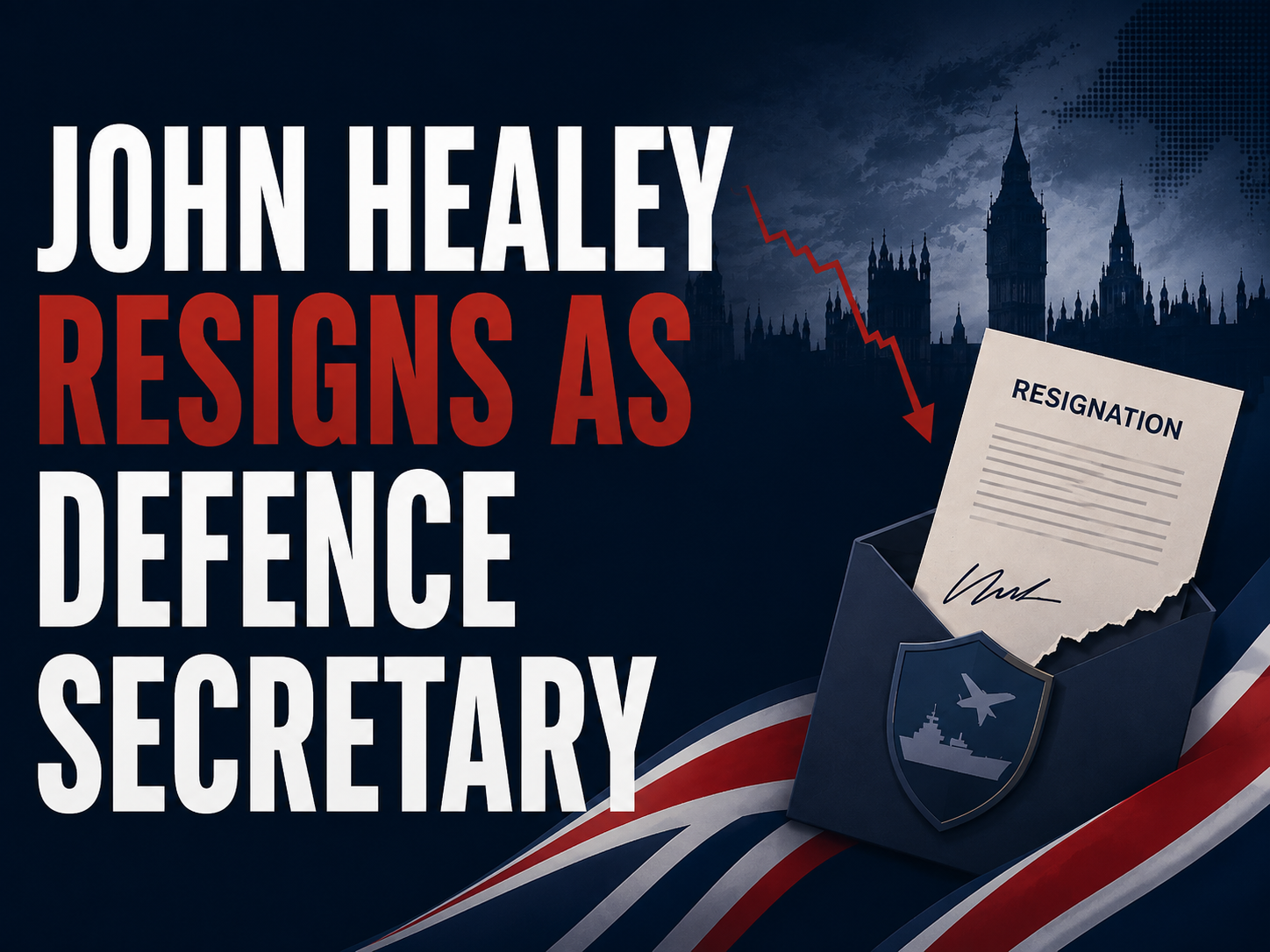

John Healey has resigned as UK Defence Secretary following a dispute with Prime Minister Sir Keir Starmer and the Treasury over the Government’s proposed Defence Investment Plan.
Healey, who had served as Secretary of State for Defence since Labour entered government in July 2024, said the financial settlement attached to the long-awaited plan fell “well short” of what was required to meet the UK’s current and future defence needs.
In his resignation letter to the Prime Minister, Healey said the UK was facing a “new era of threat” which demanded a corresponding increase in defence investment. He argued that the proposed settlement would not provide the Armed Forces with the resources needed to improve readiness, support personnel on operations, and respond to increasing pressure across key theatres.
The resignation
The resignation comes at a critical point for UK defence policy, with the Defence Investment Plan expected to set out the Government’s procurement, capability and spending priorities for the coming years. Healey’s departure places renewed scrutiny on the balance between strategic ambition and available funding, particularly as the UK continues to support Ukraine, strengthen NATO commitments, and respond to instability in the Middle East and High North.
According to Healey, the proposed settlement would see defence spending rise only marginally by 2030, despite existing commitments to increase expenditure over the longer term. He warned that the structure of the funding package risked delaying essential investment at a time when operational demands and readiness pressures were already increasing.
Healey stated that he could not accept a settlement which, in his view, failed to give the Armed Forces the resources they required. He said this left him with “no other option” than to resign as Defence Secretary.
The resignation has prompted a response from the Defence Committee, whose Chair, Tan Dhesi MP, described the development as a “grave moment”. The Committee said the Government must take the warning seriously and called for the Defence Investment Plan to be affordable, deliverable, fully funded and subject to proper parliamentary scrutiny.
For the defence sector, the resignation raises immediate questions over the future direction of the Defence Investment Plan, including whether its publication will be delayed, revised or taken forward under a new Secretary of State. The plan is expected to have significant implications for procurement, industrial capacity, force readiness and the UK’s ability to align national security commitments with budgetary reality.
The wider implications
Healey’s resignation also underlines wider pressure on the Ministry of Defence to move from policy ambition to funded delivery. Defence manufacturers, suppliers and service providers will be watching closely for clarity on capability priorities, spending timelines and the level of certainty available for long-term investment decisions.
At the time of writing, a successor had not been formally confirmed.