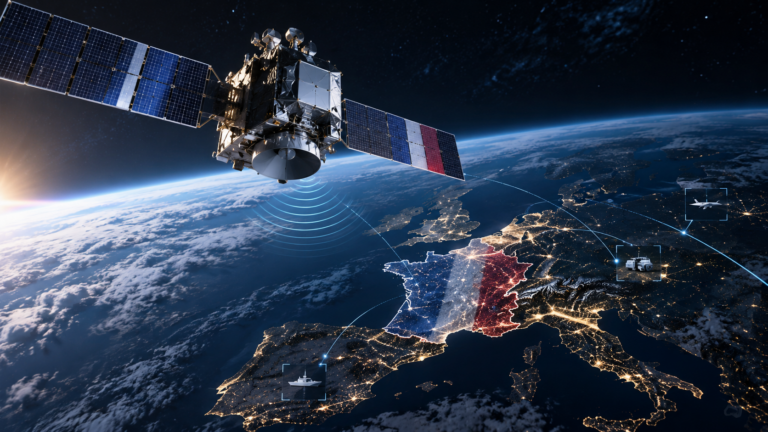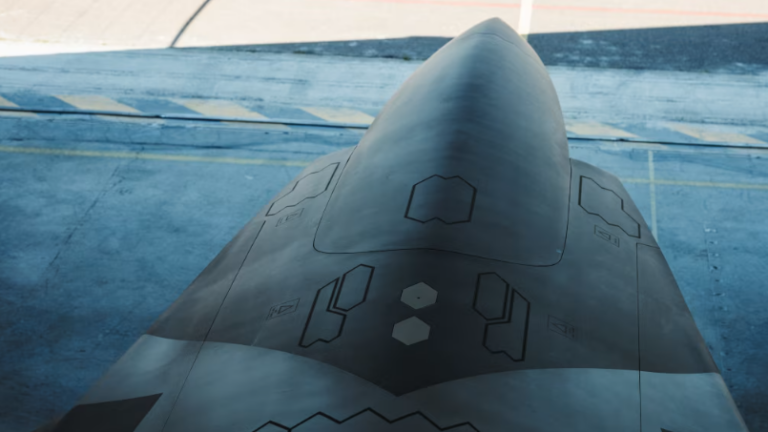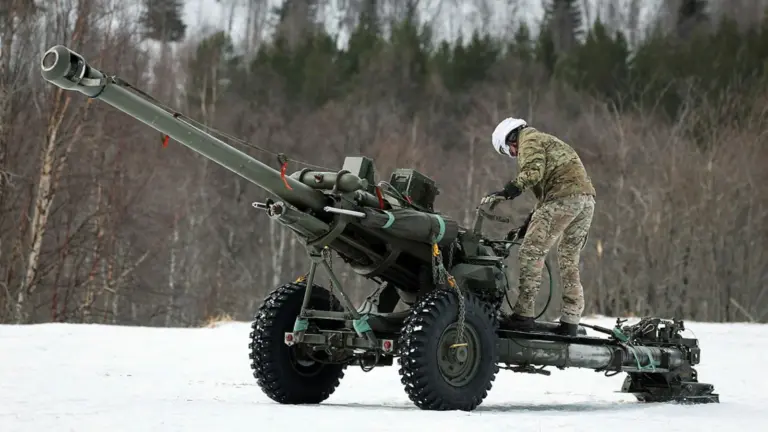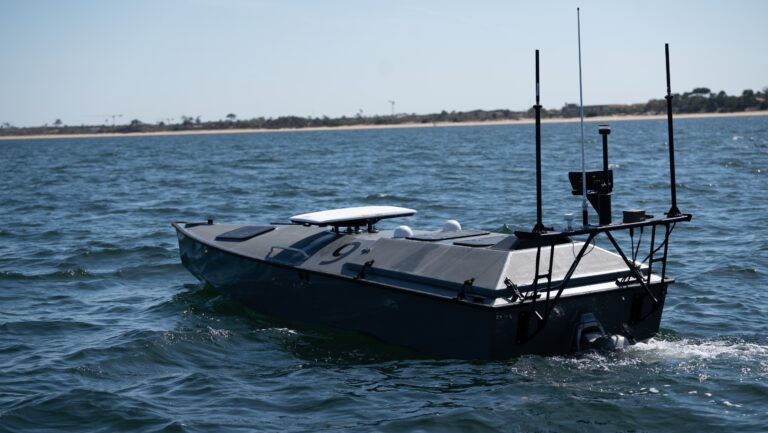


Air defence procurement has traditionally placed significant emphasis on the performance of individual radars and interceptors. Increasingly, however, the decisive capability is becoming the network connecting them.
A recent German Air Force exercise provides a useful example. During Timber Express 2026, Hensoldt’s Twinvis passive radar was integrated into Rheinmetall’s Skymaster command-and-control system, which was directing a Skynex air defence battery. Sensor information was fused through NATO’s Link 16 network to contribute to a common air picture.
The individual technologies are important, but the wider procurement lesson is interoperability. Modern air defence cannot depend upon a single radar transmitting continuously from a predictable location.
Detection without another transmitter
Passive radar works differently from a conventional active radar. Rather than transmitting its own radar signal and analysing the return, systems such as Twinvis can use existing electromagnetic transmissions within the environment to assist with detection and tracking.
That provides another source of information without adding the same type of active radar emission to the battlefield.
The German demonstration combined passive and active radar information alongside other potential sensor inputs within an integrated command environment. Rheinmetall said the architecture can also incorporate electro-optical sensors.
The relevance extends beyond conventional aircraft. The companies identified potential applications involving Skynex, mobile Skyranger systems and counter-UAS capabilities.
For defence planners, this reflects an important shift. A radar should increasingly be evaluated not simply according to what it can detect independently, but according to the quality of information it can contribute to a wider network.
Resilience requires distributed sensing
There is another reason for distributing sensors: survivability.
Sensors, command posts and air defence launchers can themselves become priority targets. An architecture dependent on a small number of high-value nodes creates vulnerabilities if those nodes are detected, disrupted or destroyed.
A network combining active radar, passive sensing and electro-optical information provides more options. If one sensor is unavailable, another may still contribute information. Different technologies can also provide complementary data about the same target.
This places greater importance on software, communications standards and data fusion. The effectiveness of the network depends on information reaching commanders and weapon systems quickly enough to support an engagement.
That changes what defence buyers should demand from new equipment. Proprietary performance remains relevant, but closed systems that cannot exchange information easily may become progressively harder to justify.
The future air defence battery is therefore unlikely to be defined by one radar, one missile or one manufacturer. It will be defined by how effectively different sensors and effectors operate together.
Procurement needs to recognise that reality. In a networked battlespace, integration is becoming a capability in its own right.