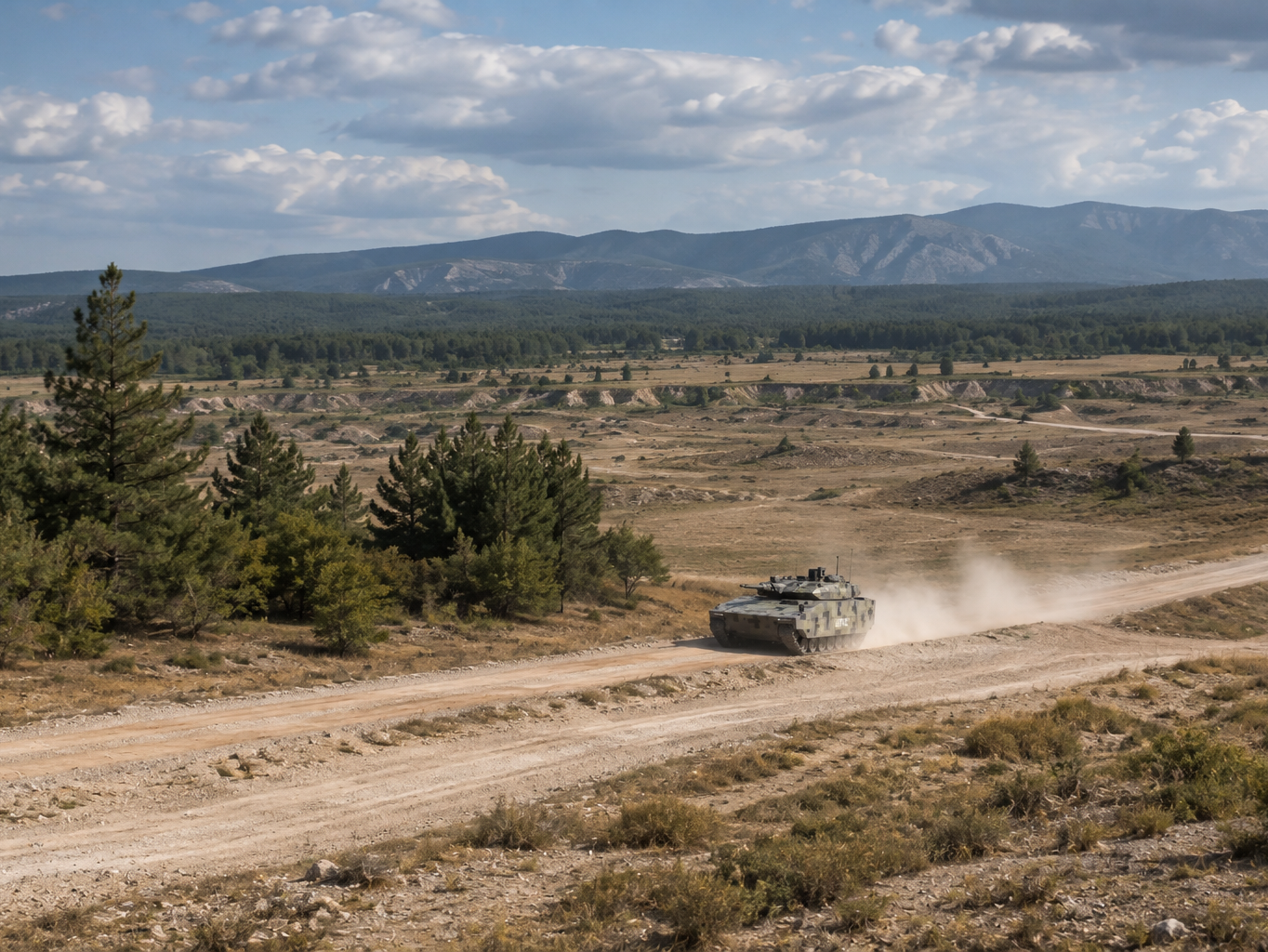

American Rheinmetall has delivered the first of eight Lynx XM30 combat vehicle prototypes to the US Army, beginning a new phase of testing in the programme to replace the M2 Bradley Fighting Vehicle.
Announced on 1 September, the delivery moves the vehicle into government-led developmental and performance testing under the XM30 programme’s Phase 3/4 Engineering and Manufacturing Development contract. The contract, valued at approximately $764 million, covers digital design, prototype construction and full-system validation.
The first vehicle will now undergo evaluation while American Rheinmetall prepares to deliver the remaining seven prototypes later in 2026. These vehicles are expected to support operational unit training and large-scale exercises as the US Army assesses potential replacements for the Bradley.
Modular vehicle architecture
Rheinmetall has designed the Lynx XM30 around a modular configuration and open architecture intended to make it easier to integrate new technologies as operational requirements change.
The vehicle incorporates a hybrid-electric powertrain, together with digital systems and secure real-time connectivity. Rheinmetall says the architecture is intended to support the integration of additional sensors, weapons and other technologies during the platform’s service life, an increasingly important consideration as armoured formations face threats including uncrewed aircraft, precision weapons and electronic warfare.
Production of the prototypes is spread across several US facilities. Turret fabrication takes place in Plymouth, Michigan, before subsystems are transferred to Slidell, Louisiana, for final hull and chassis integration. Completed vehicles undergo automotive testing before final preparation and joint inspection with the Defense Contract Management Agency ahead of government acceptance.
American Rheinmetall is prime contractor for Team Lynx, which also includes Textron Systems, Raytheon, L3Harris Technologies, Allison Transmission and Anduril Industries.
Testing informs future procurement
The remaining prototypes will support the US Army’s Transformation in Contact 2.0 initiative, which is being used to introduce and evaluate new technologies alongside operational and training units.
Following initial military safety checks, the XM30 vehicles are expected to participate in field manoeuvres and larger combat simulations alongside the programme’s technical evaluation work.
For defence procurement teams, the delivery marks an important transition from digital design and development into physical testing of a potential future infantry fighting vehicle. The open systems approach is also significant from a through-life procurement perspective, as the ability to incorporate new electronics, sensors and weapon systems without extensive redesign could become increasingly important over the lifetime of a modern armoured platform.
The trials will provide the US Army with evidence on vehicle performance, integration and operational suitability as the XM30 programme progresses towards its later acquisition stages.