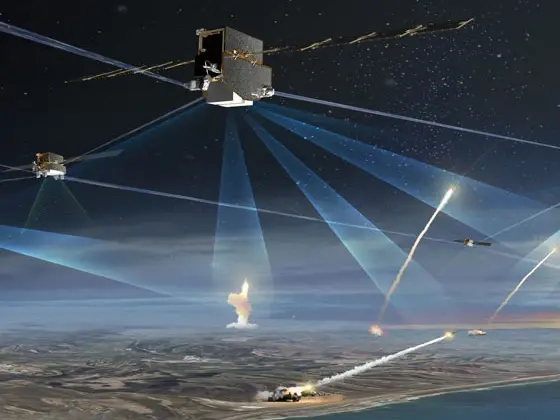

Northrop Grumman has signed two multi-year framework agreements worth more than $3 billion to expand production of components for the PAC-3 Missile Segment Enhancement and Terminal High Altitude Area Defense systems.
The agreements involve the US Department of War and Lockheed Martin and are intended to increase the supply of components used in US and allied integrated air and missile defence. The largest element is a $2 billion framework covering PAC-3 MSE components, including solid rocket motors and ignition safety devices.
A separate $1 billion framework will support increased production of components for the Terminal High Altitude Area Defense, or THAAD, system. Northrop Grumman said this agreement will substantially increase monthly component deliveries over a seven-year period.
Rocket motor capacity increases
Northrop Grumman plans to increase PAC-3 MSE solid rocket motor production at its Allegany Ballistics Laboratory in Rocket Center, West Virginia. The company says it has doubled tactical solid rocket motor production capacity at the facility since 2021 and plans to effectively triple capacity by 2027.
Additional investment is taking place elsewhere in its propulsion manufacturing network. Northrop Grumman reports that capacity at its Utah facilities is being doubled, while solid rocket motor capacity at Elkton, Maryland, is being increased by 25%.
The company has invested more than $2 billion in munitions-related technology and facilities since 2019, including more than $1 billion connected specifically to solid rocket motor production.
The figures demonstrate the scale of the industrial changes required when governments seek to increase missile inventories. Final assembly rates depend on sufficient capacity throughout the supply chain, including propulsion, energetic materials, electronics and specialist structural components.
THAAD output also targeted
Northrop Grumman has supplied components to the THAAD programme since 2002, including interceptor shell cores, aft bulkheads and heat shield assemblies. The latest framework is intended to increase the rate at which those components can be delivered.
The two agreements are part of a wider shift towards longer-term munitions procurement. Governments seeking higher production rates increasingly need manufacturers to make capital investments before additional weapons can be delivered at scale.
Multi-year frameworks provide greater certainty for that investment than individual annual orders, particularly where new facilities, machinery or workforce capacity are required.
For procurement organisations, the Northrop Grumman agreements underline that missile availability is increasingly an industrial-capacity issue as much as a technology issue. Air defence systems can only maintain operational readiness if interceptor production, component manufacturing and replenishment capacity are capable of keeping pace with demand.