
As drones become cheaper, more numerous and resilient to disruption, air defence is being forced to reconsider detection and interception, writes Rebecca Spayne.
The drone problem is no longer really about drones. It is about what their proliferation has done to the economics and architecture of air defence.
For decades, air defence procurement could broadly align the sophistication and cost of an interceptor with the value and complexity of the threat it was designed to defeat. Uncrewed systems have disrupted that logic. Relatively inexpensive aircraft can now provide reconnaissance, carry payloads, attack valuable assets and operate in numbers large enough to place sustained pressure on defensive systems. At the same time, the category itself stretches from small FPV aircraft to larger intelligence, surveillance and reconnaissance platforms, loitering munitions and increasingly coordinated groups of systems.
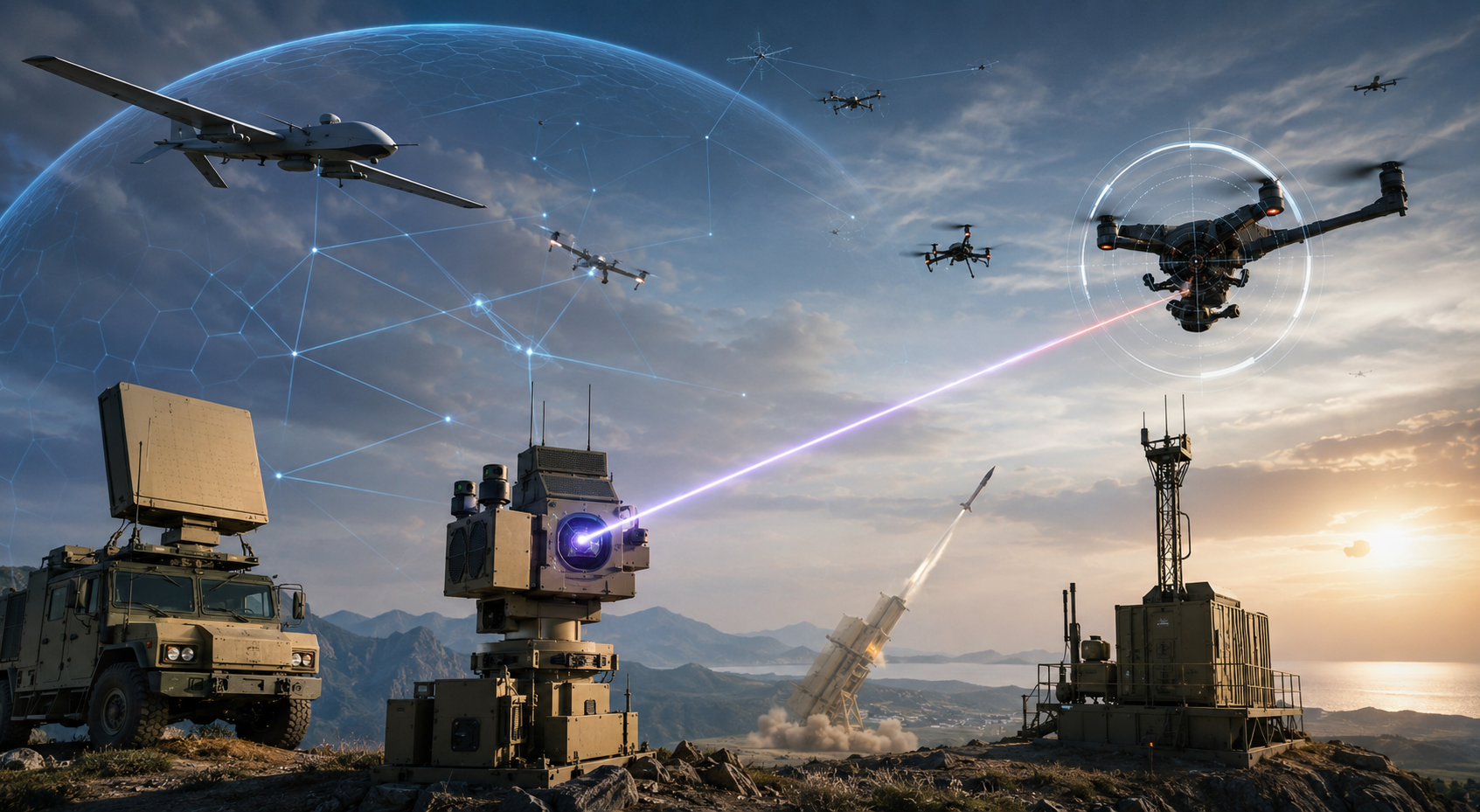
There is consequently no sensible single answer to counter UAS. A radar optimised to detect a small, slow target has a different role from an electronic warfare system attempting to disrupt its link. A laser presents different operational and economic considerations from a missile, while an interceptor drone introduces another response altogether. Even before defeat is considered, commanders need confidence that a threat has been detected, classified and tracked early enough to make the right decision.
The economics of interception
Rafael provides perhaps the clearest illustration of how the interceptor itself is diversifying. Its wider air defence portfolio spans Iron Dome and the Tamir interceptor, David’s Sling, Spyder and directed energy systems including Iron Beam and Lite Beam. Rather than expecting one technology to address every target, the architecture creates different opportunities to respond according to range, threat and operational circumstances.
Daniel Tsemach, International Spokesperson for Rafael, argues that this distinction is particularly important at the lower end of the threat spectrum. Smaller drones carrying relatively limited payloads can still be lethal, but intercepting them demands a different calculation from engaging more sophisticated airborne threats.
“You are not going to have one system. You need to have layers,” he explains. Rafael is consequently developing counter UAS drone interceptors intended to address lower cost threats alongside its existing kinetic and directed energy systems.
Directed energy changes that calculation again. Rafael describes Iron Beam as a 100kW class high energy laser interceptor for counter rocket, artillery and mortar missions and counter UAS, while Lite Beam provides a lighter tactical laser capability aimed at smaller UAS.
The appeal is obvious, particularly where repeated engagements are expected. Yet cost per engagement cannot be considered without the asset being protected. As Tsemach puts it, “The cost is not just financial. You are protecting critical assets, you are protecting civilian populations.” A kinetic interceptor may be comparatively expensive, but that calculation changes rapidly when the consequence of allowing the threat through is considerably greater.
The procurement challenge is therefore not simply to find the cheapest way of destroying a drone. It is to create enough options that the response can remain proportionate while retaining more capable effectors for threats that demand them.