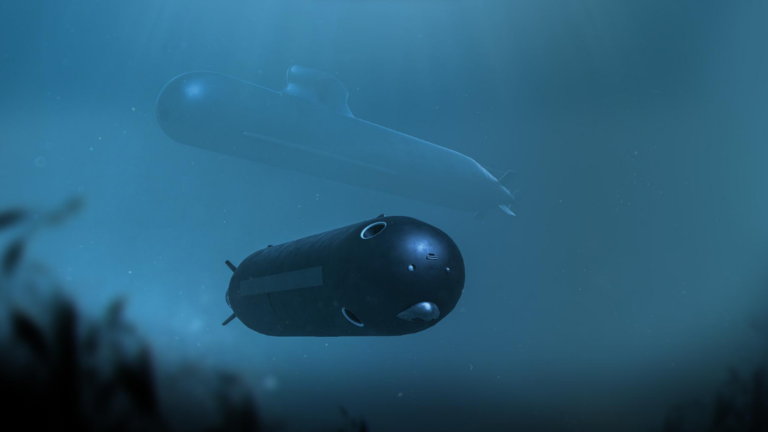


Swedish defence manufacturer Saab has completed the initial development and sea trials of a large uncrewed underwater vehicle (LUUV) demonstrator, marking a further step towards the potential introduction of autonomous systems into Sweden’s naval operations.
Announced on 16 October 2026, the project has been undertaken in partnership with the Swedish Defence Materiel Administration (FMV) and the Swedish Armed Forces. The demonstrator was developed, constructed and launched less than a year after the original contract award.
The programme is intended to assess how larger autonomous underwater platforms could support existing naval assets, extend operational endurance and improve situational awareness during maritime missions.
Autonomous technology development
The LUUV demonstrator has progressed from an initial concept to a functional underwater platform, with successful sea trials completing the first phase of development.
A central element of the project is Saab’s Autonomous Ocean Core technology, an autonomous control system designed for surface and subsurface vessels. The software supports the development of autonomous functions and provides a foundation for integrating additional sensors and mission capabilities.
Saab has combined this technology with its existing expertise in submarine engineering, underwater systems and sensor integration.
The demonstrator has also been designed to support future operations alongside conventional naval platforms, including submarines. This could allow navies to examine different approaches to deploying crewed and uncrewed assets during underwater missions.
The next development phase is expected to concentrate on more advanced capabilities, including further work on autonomy, software and sensors.
Implications for naval procurement
The project reflects growing interest in autonomous underwater systems as naval forces examine ways to increase operational capacity without relying exclusively on crewed platforms.
For defence procurement authorities, the Swedish programme offers an example of how government and industry collaboration can accelerate the development and testing of emerging military technologies.
The relatively short period between contract award and sea trials is particularly relevant to acquisition teams seeking to reduce development times while retaining opportunities for operational evaluation.
The demonstrator remains a development platform rather than an announced operational acquisition. Its results will help Swedish authorities assess future procurement requirements and determine potential applications for autonomous underwater systems.
The programme also highlights the importance of software architecture when evaluating uncrewed naval platforms. The ability to integrate sensors, update autonomous functions and work alongside existing assets could become an increasingly important consideration in future naval equipment specifications.
As development continues, the Swedish Armed Forces and FMV will be able to use the demonstrator’s results to inform decisions about the potential deployment of larger autonomous underwater vehicles.