

BAE Systems has introduced two defence technologies designed to address the increasing threat posed by uncrewed aircraft and coordinated drone attacks against military installations and deployed forces.
Unveiled at the Association of the United States Army (AUSA) exhibition on 12 October 2026, the Multi-Domain Artillery Cannon System (MDACS) and High Power Microwave (HPM) system are intended to provide complementary capabilities within a layered air defence architecture.
The developments reflect growing military requirements for counter-uncrewed aircraft systems (C-UAS) that can respond to multiple simultaneous threats without relying entirely on conventional missile-based interceptors.
Combining kinetic and directed energy systems
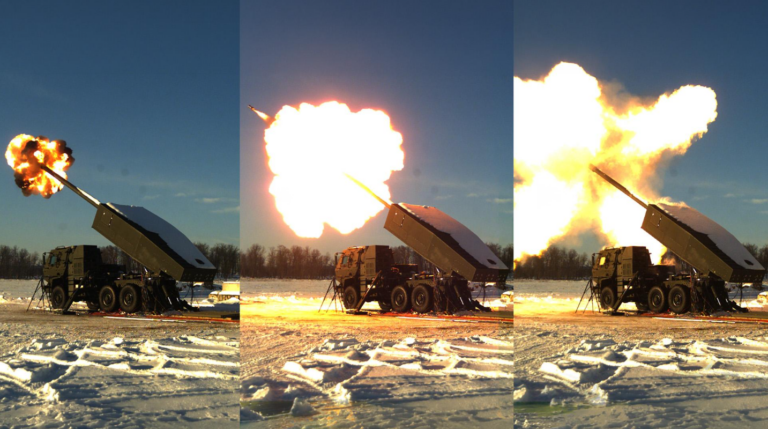
MDACS is an air-transportable artillery system designed to undertake both offensive and defensive missions using precision-guided ammunition.
For air defence operations, the system can employ the Hypervelocity Projectile (HVP), a guided round intended to engage aerial threats.
The platform can also fire Scorpio-XR precision-guided ammunition against fixed and moving ground targets. According to BAE Systems, this munition offers twice the range of existing 155mm cannon-launched projectiles.
The HPM system takes a different approach by using directed electromagnetic energy to counter drone threats.
BAE Systems states that the technology incorporates more than 99% commercially available components, an approach intended to support system maturity and simplify elements of its supply chain.
Unlike conventional kinetic systems, the HPM capability does not require individual ammunition rounds for each engagement. The manufacturer says it can provide sustained defensive coverage against drone swarms while sufficient power remains available.
Together, the technologies are intended to combine precision engagement with the ability to respond to larger numbers of approaching threats.
Addressing evolving air defence requirements
For military acquisition teams, the announcement highlights the increasing importance of layered counter-drone solutions capable of addressing different types and volumes of aerial threats.
Conventional missile and gun-based defences face potential limitations when responding to large numbers of comparatively inexpensive uncrewed aircraft, particularly where available ammunition stocks or reload capacity are constrained.
Directed energy systems offer an alternative engagement method, although their suitability depends on factors including power availability, operational conditions and integration with supporting detection and command systems.
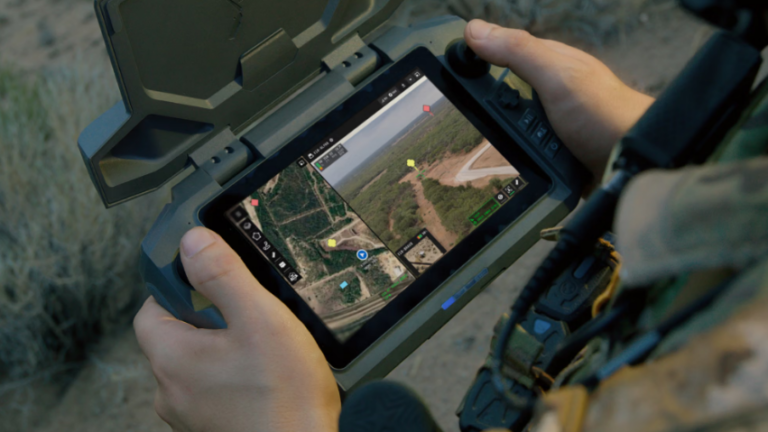
The introduction of MDACS and HPM also raises wider considerations for defence integrators responsible for combining sensors, weapons and command-and-control technologies into coherent air defence networks.
Procurement assessments will need to consider interoperability, lifecycle support, deployment requirements and the suitability of each technology for specific operational environments.
The systems were presented as capability demonstrators at AUSA 2026. Their announcement does not, by itself, establish that either has entered operational service.
Nevertheless, they illustrate the direction of development in counter-drone technology as military organisations seek more adaptable responses to increasingly complex aerial threats.