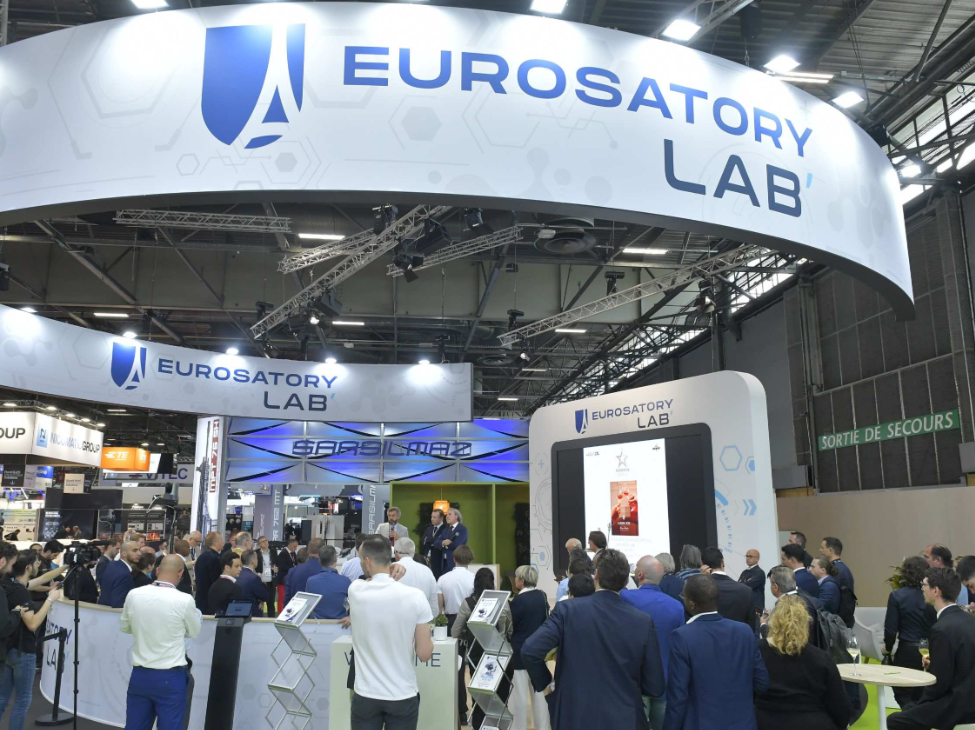

What to expect from the global defence and security show, EUROSATORY 2026, taking place in Paris Nord Villepinte.
From 15 to 19 June, Eurosatory 2026 will bring the international defence and security community back to Paris Nord Villepinte at a point of significant pressure, investment and technological change for the sector.
The 29th edition of the exhibition is set to arrive at a defining moment. Defence ministries, security agencies, emergency planners, procurement teams and industrial suppliers are operating in an environment shaped by rearmament, contested supply chains, hybrid threats, rapid technological acceleration and the need to move from concept to capability at greater speed. Against that backdrop, Eurosatory will not simply act as a product showcase. It will provide a view of how the sector is responding to operational realities that are becoming more complex, more connected and more demanding.
The 2026 edition is expected to bring together more than 2,600 companies from 68 countries, with technologies and solutions spanning defence, homeland security, civil security, crisis management and critical infrastructure protection. More than 200 innovations have already been presented by exhibitors ahead of the show, indicating the breadth of development taking place across established industry, specialist suppliers, start-ups, research centres and operational communities.
The scale of Eurosatory has always been part of its relevance. In 2024, the show welcomed 2,032 exhibitors from 61 countries, 42 national pavilions, 334 official delegations from 93 countries, 43,000 trade visitors, 635 journalists, more than 450 international speakers and 120 conferences. For 2026, the exhibition is expanding again, extending into Hall 4 and covering more than 185,000 sqm. That expansion is not simply a matter of floor space. It reflects a sector in which demand, urgency and industrial ambition have all increased.
Charles Beaudouin, General Manager of Eurosatory and Chairman of COGES EVENTS, has described the 2026 edition as “the most ambitious in the event’s history”, noting that it will bring together “all the stakeholders that matter over five days: manufacturers, start-ups and leading experts.” That is an important point. The defence and security market is no longer defined only by large platforms or traditional procurement cycles. Capability increasingly depends on the integration of sensors, effectors, autonomous systems, communications, software, data, logistics and resilient industrial capacity.
This year’s show is therefore expected to be watched closely not only for product launches, but for evidence of how industry is adapting to the pace of operational change.
A show shaped by operational reality
A central feature of Eurosatory 2026 will be its focus on current and future operational environments. The redesigned demonstration zone is expected to reflect the reality of modern operations more directly, with scenarios including trench warfare, 3D manoeuvres with drones and close quarter battle.
That emphasis matters. Live demonstrations provide a different type of insight from exhibition stands alone. They allow visitors to assess movement, integration, ergonomics, communications, response time and interoperability in a more practical setting. For military and security professionals, seeing a system in motion can clarify its relevance in a way that static presentations cannot.
Drones, counter-drone technologies, unmanned ground systems, protected mobility, tactical communications, surveillance platforms, robotics and soldier systems are all expected to feature heavily in visitor interest. However, the most valuable demonstrations will be those that show how technologies operate as part of a wider system. The question for many buyers will not only be whether a platform works, but whether it can be integrated, sustained, deployed at scale and adapted to the needs of different operational theatres.
The inclusion of trench warfare within the demonstration environment is particularly notable. It reflects a wider return to issues that, for some time, were treated as secondary in many modernisation programmes: mass, survivability, mobility under fire, engineering support, concealment, logistics, ammunition supply and endurance. At the same time, the inclusion of drone manoeuvres and close quarter scenarios indicates that traditional land warfare challenges are now deeply connected to digital, aerial and autonomous capabilities.
For visitors, the live areas should offer one of the clearest indications of how the exhibition is interpreting the modern battlefield: not as a single domain, but as an integrated environment in which land, air, cyber, space, electronic warfare and information systems all interact.
The four themes to watch
Eurosatory 2026 will focus on major strategic themes that reflect the direction of defence and security procurement. These include multi-domain superiority, remote engagement, land manoeuvre and air mobility, comprehensive security, crisis management, industrial resilience and the war economy.
Multi-domain superiority is likely to be one of the most important areas of discussion. Across the sector, capability is shifting from the performance of individual assets to the effectiveness of networks. Sensors, command systems, unmanned platforms, data links, AI-enabled tools and effectors must work together in increasingly contested environments. For visitors, this means looking beyond individual products and asking how systems connect, how data is processed, how decisions are supported and how resilience is maintained under electronic, cyber or physical pressure.
Remote engagement will also be a major point of focus. The growth of drones, loitering munitions, robotic systems, stand-off sensors and remotely operated platforms is changing the way forces assess risk, gather intelligence and apply effects. This development is not limited to the military domain. Border security, civil protection, emergency response and infrastructure security are also increasingly influenced by remote monitoring, unmanned operations and advanced situational awareness.
Land manoeuvre and air mobility remain central to Eurosatory’s identity. Visitors can expect continued attention on armoured vehicles, tactical mobility, rotorcraft, support platforms, transport, protection systems and battlefield logistics. What will be particularly significant in 2026 is how these traditional capability areas are being adapted to new threats. Mobility now has to be understood alongside drone exposure, electronic warfare, layered air defence, signature management and rapid maintenance.
The fourth major area, industrial resilience and the war economy, may prove to be one of the most serious subjects at the show. Defence capability depends not only on advanced technology, but on the ability to manufacture, maintain, replenish and scale production. Ammunition, spare parts, repair capacity, secure supply chains, sovereign manufacturing and industrial cooperation are now strategic issues. Procurement decisions are increasingly tied to production depth, supply assurance and the ability to respond to sustained demand.
This is where Eurosatory’s value as a meeting point becomes clear. It brings together governments, armed forces, manufacturers, system integrators, component suppliers, research organisations and smaller technology providers in one environment. That combination allows discussions to move beyond immediate equipment requirements and into longer-term questions around industrial capacity, partnership and resilience.
Innovation under pressure
The 2026 edition is expected to place strong emphasis on innovation, but this innovation will be judged against a practical standard. Defence and security buyers are not simply looking for concepts. They are looking for technologies that can solve immediate problems, survive operational use and fit within wider capability structures.
Artificial intelligence, advanced sensors, robotics, cyber security, simulation, digital training, electronic warfare, counter-UAS, secure communications and new materials are likely to feature prominently across the show floor. However, the market is becoming more demanding in how it evaluates technology. Novelty alone is not enough. Systems must be deployable, maintainable, scalable and compatible with existing operational frameworks.
This is particularly relevant for start-ups and deep tech companies. Eurosatory has become an important platform for emerging technology providers, but the pathway from innovation to procurement is rarely straightforward. Defence and security customers need confidence in long-term support, certification, cyber resilience, supply continuity and interoperability. The most successful emerging companies at the show are likely to be those that can demonstrate not only technical originality, but operational relevance and industrial maturity.
The organiser’s focus on the shift from a start-up ecosystem to industrial deep tech is therefore timely. Defence and security innovation is increasingly dependent on the ability to combine agility with robustness. Technologies that can be rapidly adapted, integrated into wider systems and produced at meaningful scale will attract particular attention.
Serving states, not just markets
One of the defining aspects of Eurosatory is its connection to state-level requirements. The exhibition is not simply a commercial marketplace. It is a forum where government agencies, armed forces, security services and industrial partners assess the capabilities needed to respond to present and future challenges.
This is especially important in 2026. States are facing simultaneous pressures across defence readiness, homeland security, border management, crisis response, civil protection and infrastructure resilience. The boundaries between these areas are becoming less distinct. Hybrid threats, cyber attacks, disinformation, terrorism, natural disasters, migration pressures and regional instability all require coordinated approaches.
Eurosatory’s value lies in its ability to bring military, civil and security stakeholders into the same conversation. A technology developed for defence may have applications in emergency response. A surveillance system used for border security may also support critical infrastructure protection. A communications platform designed for military use may have relevance for crisis management. This cross-sector relevance will be one of the key themes to watch.
The presence of official delegations and national pavilions will also be significant. National representation at Eurosatory is not only about export promotion. It reflects industrial strategy, sovereign capability, alliance relationships and procurement priorities. For visitors, the national pavilions often provide a useful view of how different countries are positioning their defence and security industries.
The conference and speaker programme
The speaker programme will provide another important layer of context. Eurosatory 2026 is expected to feature senior political, military, institutional and operational figures, including Catherine Vautrin, Minister of the Armed Forces and Veterans; Alice Rufo, Minister Delegate to the Minister of Armed Forces and Veterans; Patrick Pailloux, Director of the French Directorate General of Armament; Andrius Kubilius, European Commissioner for Defence and Space; and senior military representatives from France, Belgium, the UK and other European states.
The presence of figures from defence ministries, armed forces, European institutions, border agencies and national capability organisations underlines the strategic character of the event. These discussions will be important for understanding the policy and procurement environment around the technology on display.
For industry, the conference programme offers insight into how decision-makers are framing the next phase of defence and security investment. For visitors, it provides a way to place individual systems and product launches into a broader strategic context. The strongest sessions are likely to be those that connect technology with operational lessons, procurement reform, industrial capacity and future force development.
What visitors should prioritise
With an exhibition of this scale, preparation will be important. Visitors should not treat Eurosatory as a general walk-through. The best use of the show will come from identifying priorities in advance, mapping relevant exhibitors, building time around live demonstrations and selecting conference sessions that align with operational or procurement needs.
For those focused on land systems, the key areas are likely to include mobility, survivability, active protection, counter-drone integration, logistics and modularity. For visitors interested in security and critical infrastructure, the relevant areas will include surveillance, perimeter protection, command and control, emergency response, access technologies, crisis management tools and cyber-secure communications.
For those tracking emerging technology, the priority should be to assess how new systems are moving from concept to deployment. Questions around integration, testing, procurement readiness and production capacity will be as important as technical performance.
The live demonstrations should be treated as a core part of the visit rather than an optional add-on. They are likely to provide some of the clearest evidence of how exhibitors are positioning their solutions against current operational requirements.
Defence Buyer on the show floor
As an international media partner for Eurosatory, Defence Buyer will be present on the show floor throughout the event. The team will be conducting interviews, meeting exhibitors, speaking with technology providers and gathering insight for coverage across print, digital and video platforms.
For readers and visitors, the show will provide an opportunity to engage directly with the Defence Buyer team and discuss the technologies, procurement trends and operational challenges shaping the sector. Copies of the magazine will also be available on the show floor, giving visitors access to current editorial coverage and analysis.
This direct presence matters. Major exhibitions provide an opportunity to move beyond press releases and speak with the people developing, buying and deploying technology. For a publication covering defence procurement and security technology, those conversations are essential. They help identify which developments have genuine operational significance and which market trends are likely to shape future coverage.
A critical edition for a changing sector
Eurosatory 2026 is expected to be one of the most significant editions of the show to date. Its timing is central to that importance. Defence and security organisations are not operating in a stable environment. They are having to adapt to high-intensity conflict, hybrid threats, rapid technological change, contested supply chains and increasing pressure to modernise at speed.
The exhibition will reflect that reality. Visitors should expect to see advanced technologies, major industrial players, specialist suppliers, start-ups, national pavilions, live operational demonstrations and a strong programme of strategic discussion. However, the most important story will be how these elements connect.
The future of defence and security will not be shaped by isolated platforms alone. It will be shaped by integration, resilience, industrial capacity, data, autonomy, interoperability and the ability to respond quickly to changing threats. Eurosatory 2026 will offer a concentrated view of how the global sector is addressing those demands.
For industry, it will be a platform to demonstrate capability. For governments and agencies, it will be a place to assess solutions and partnerships. For visitors, it will be a chance to understand where the market is moving. For Defence Buyer, it will be an opportunity to report from the centre of one of the most important defence and security gatherings of the year.
As the sector continues to confront strategic uncertainty and operational complexity, Eurosatory 2026 is set to provide a clear view of the technologies, partnerships and industrial priorities that will define the next phase of defence and security capability.