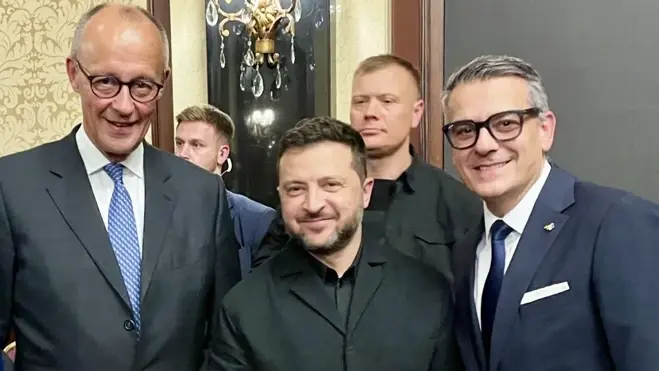

HENSOLDT has signed a memorandum of understanding with Ukraine’s Ministry of Defence to expand cooperation on radar systems and strengthen the country’s air defence surveillance capabilities.
Announced on 5 October 2026, the agreement was signed by HENSOLDT CEO Oliver Dörre during German Chancellor Friedrich Merz’s visit to Ukraine.
The arrangement establishes a framework for further radar deliveries and technical collaboration, reflecting continuing demand for surveillance technologies capable of supporting integrated air defence operations.
Expanding long-range radar capabilities
The memorandum covers potential further large-scale deliveries of radar systems and cooperation on the development of additional capabilities. It also includes examining opportunities for the deployment and joint operation of HENSOLDT’s TRL-4D LR long-range radar systems.
Radar technology provides essential surveillance information for identifying and tracking airborne threats, supporting the wider command and control processes involved in air defence.
Long-range sensors can contribute to situational awareness by providing information needed to assess threats and coordinate defensive responses. The agreement builds on existing cooperation between HENSOLDT and Ukraine in ballistic missile defence.
Specific delivery quantities, contract values and deployment schedules were not disclosed in the announcement.
Supporting integrated air defence operations
The partnership highlights the continuing importance of radar surveillance in protecting military assets, civilian populations and critical national infrastructure.
For defence procurement authorities, radar acquisition involves more than selecting individual sensors.
Integration with command systems, communications infrastructure and existing defensive equipment is essential to achieving effective operational performance. Long-term technical support, maintenance and training also influence system availability and sustainability.
The proposed cooperation between HENSOLDT and Ukraine reflects these broader requirements, combining potential equipment provision with further technical development.
As an agreement outlining intended cooperation, the memorandum should not be interpreted as confirmation that every potential radar delivery or deployment has been contracted.
Nevertheless, it demonstrates continuing investment in surveillance capabilities and the growing importance of interoperable sensing technologies within modern air defence networks.