

Katie Tracy analyses how submarine modernisation, autonomous systems and adaptable naval weapons are changing how navies navigate contested waters.
For much of submarine warfare, advantage has rested on an apparently simple principle: find the other platform before it finds you. The technology required to achieve that is anything but simple.
Modern submarines operate within an increasingly complex environment in which acoustic sensing, autonomous vehicles, communications, combat management and weapons are becoming interconnected. The submarine remains one of the most difficult military assets to detect, yet the battlespace around it is expanding as uncrewed systems and distributed sensors allow navies to extend awareness beyond the immediate reach of a crewed platform.
For procurement teams, submarine capability can therefore no longer be assessed purely through the boat itself. The more significant question is how effectively submarines, autonomous systems, sensors and weapons can operate as a coherent undersea force.
Extending the underwater picture
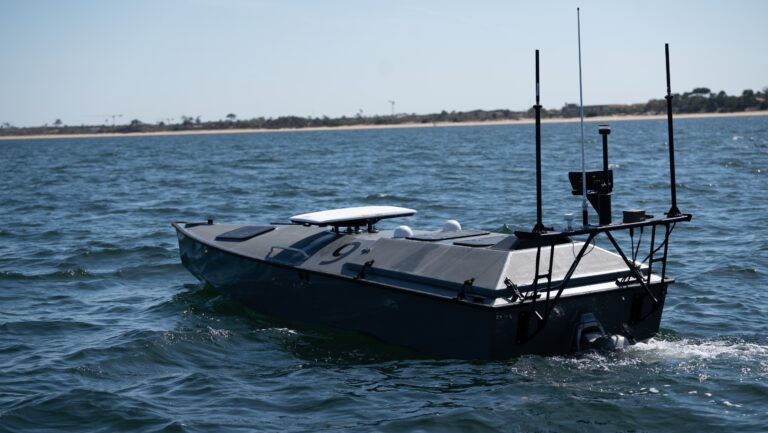
One of the most consequential developments is the ability to distribute undersea missions across autonomous platforms. Leidos is developing several technologies around this principle, including its Sea Dart uncrewed undersea vehicle and Sea Castle undersea station. Sea Castle is being developed as infrastructure from which UUVs can recharge and exchange mission data, potentially supporting greater persistence without requiring regular recovery by a crewed platform.
Leidos is also working on distributed acoustic sensing and a wider portfolio of autonomous maritime technologies. The operational significance is the opportunity to place sensors and vehicles further from high value crewed assets while continuing to gather information across a wider area.
This does not make the submarine redundant. Instead, autonomy can change how frequently the submarine itself needs to approach an area simply to collect information. A distributed sensor or autonomous vehicle can potentially investigate, monitor or survey while the crewed platform maintains greater separation.
More systems in the water, however, do not automatically produce better situational awareness. Information must be communicated, processed and interpreted quickly enough to support a decision.
Keeping submarines relevant for decades
While autonomous systems are expanding the undersea network, investment in crewed submarines remains substantial. General Dynamics Electric Boat continues to play a central role in US nuclear submarine construction through the Virginia class attack submarine and Columbia class ballistic missile submarine programmes.
The scale and longevity of these programmes highlight a fundamental problem in submarine procurement. A submarine may remain operational for decades while the sensors, software, processing and threats around it change considerably faster.
General Dynamics Mission Systems also supports submarine fire control and combat system activity, including work associated with the AN BYG 1 system. This relationship between platform, combat system and weapon is critical. A weapon cannot be assessed solely by its range or payload. Its operational value depends on the ability of the wider system to detect a contact, classify it, establish an appropriate firing solution and control the engagement.
That makes upgradeability particularly important. Submarine programmes need architectures capable of accommodating new processing, software and weapons capabilities throughout the service life of the vessel.