

Carrier strike groups remain among the most powerful instruments of naval power, but their future effectiveness will increasingly depend on autonomous vessels, says Joseph Clarke
For decades, carrier strike groups have represented the centrepiece of maritime power projection. Combining aircraft carriers, escort vessels, submarines, logistics support ships, and embarked air wings, these formations provide military commanders with a highly flexible capability able to deliver air power, intelligence gathering, deterrence, and operational presence across vast geographical areas.
While the carrier itself remains the most visible component of the group, the technologies underpinning modern naval operations are changing rapidly. Increasingly complex threat environments, advances in sensor technology, long range precision weapons, electronic warfare capabilities, and the emergence of autonomous systems are forcing naval planners to rethink how maritime task groups operate.
The challenge is not simply one of survivability. Modern carrier strike groups must process larger volumes of information, maintain situational awareness across wider operational areas, and coordinate activities across multiple domains simultaneously. As a result, the future effectiveness of these formations is becoming increasingly dependent on networking, autonomy, communications resilience, and data driven decision making.
This shift reflects a broader trend throughout defence. Platforms remain important, but operational advantage increasingly comes from the ability to connect systems, share information, and respond faster than potential adversaries.
The Rise of Autonomous Maritime Systems
One of the most significant developments within naval operations has been the rapid growth of autonomous and uncrewed maritime systems.
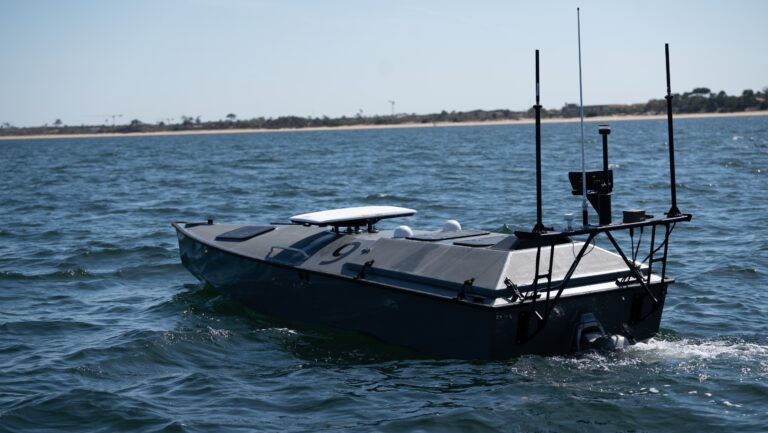
Originally employed for niche tasks such as mine countermeasures or hydrographic survey work, autonomous vessels are now being considered for a much wider range of missions. Surveillance, force protection, intelligence gathering, logistics support, electronic warfare, and anti-submarine operations are all areas where uncrewed systems are attracting increasing attention.
The primary advantage lies in persistence. Autonomous vessels can remain deployed for extended periods while reducing risk to personnel and extending the reach of manned platforms. Rather than replacing traditional warships, these systems are increasingly viewed as force multipliers that can expand operational coverage and improve situational awareness.
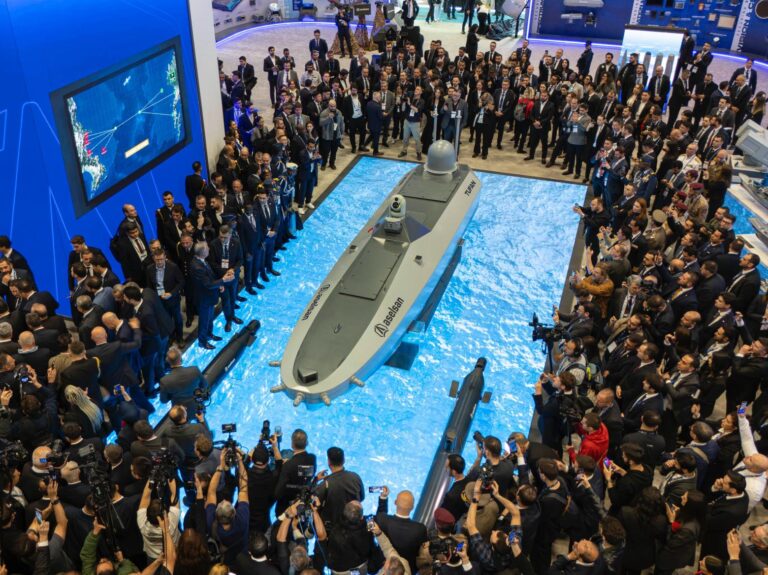
Recent naval exercises conducted by the United States Navy, Royal Navy, and allied partners have demonstrated growing confidence in the ability of autonomous systems to operate alongside conventional fleets. Uncrewed surface vessels are increasingly being integrated into task group operations, contributing sensor data and supporting distributed maritime surveillance concepts.
This trend aligns closely with the future requirements of carrier strike groups, which must monitor increasingly large operational areas while maintaining flexibility and responsiveness.
Building the Maritime Information Network
Autonomous systems are only as effective as the networks supporting them. Whether operating close to a carrier group or hundreds of miles away, uncrewed vessels must exchange information reliably and securely with commanders and operators.
This requirement has elevated communications resilience to a strategic priority.
Modern naval operations depend upon the seamless movement of data between ships, aircraft, autonomous systems, command centres, and satellite networks. As the number of connected platforms increases, maintaining network performance becomes increasingly complex.
Companies such as Rajant are contributing to this area through mobile wireless networking technologies designed to support dynamic operational environments. Mesh networking architectures can provide resilient connectivity where traditional communications approaches may struggle, allowing multiple assets to exchange information without relying upon a single point of failure.
For naval operators, this capability becomes particularly valuable during distributed operations. Autonomous vessels may move independently, operate in contested areas, or function beyond the range of conventional communications infrastructure. Maintaining reliable connectivity is therefore essential to ensuring operational effectiveness.