
Airborne ISR is becoming a networked technology discipline, where sensors, mission computing, communications and electronic warfare define operational advantage. By Beth Kellock
Air power is no longer assessed only through speed, range, payload or platform survivability. Increasingly, its value is measured by the quality of information it can collect, process, protect and distribute. Intelligence, surveillance and reconnaissance aircraft, crewed and uncrewed systems, tactical air platforms and future combat aircraft are now part of a wider digital battlespace in which sensing and communications are inseparable.
This shift is particularly significant for defence organisations seeking to modernise air capabilities without treating aircraft as isolated assets. Modern airborne systems are expected to detect emissions, classify signals, monitor movement, exchange data with other domains and support faster command decisions. The operational emphasis has moved from simply carrying sensors to integrating those sensors into a resilient information architecture.
Sensors become part of the network
The most advanced air systems increasingly combine radar, electro optical sensors, infrared systems, electronic support measures and communications intelligence within a common mission environment. The technical challenge is not only sensor performance, but how quickly collected data can be fused, prioritised and shared.
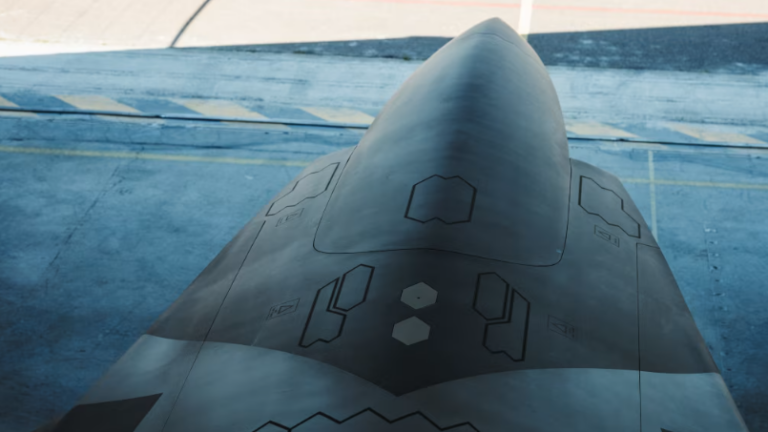
Leonardo’s role in the Global Combat Air Programme illustrates this direction. In September 2025, Leonardo announced that industry partners from the UK, Italy and Japan had formed the GCAP Electronics Evolution consortium to deliver the integrated sensing and communications component for the next generation fighter programme. The consortium is focused on the design and development phase of the aircraft’s sensing and communications architecture, showing how future combat air capability is being built around integrated electronics rather than standalone equipment.
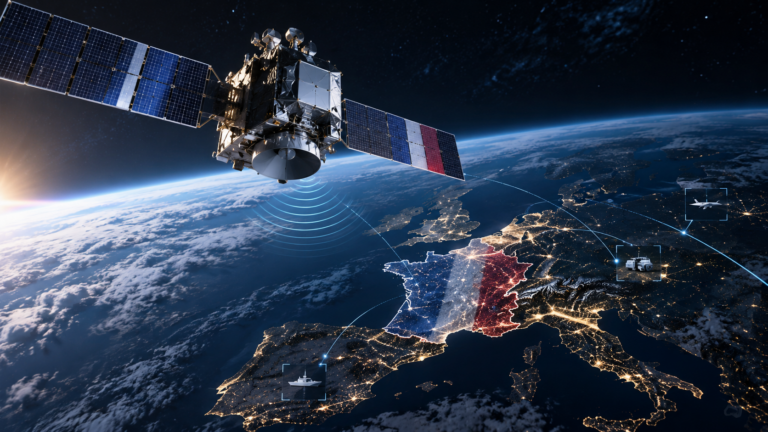
This matters because next generation air platforms will need to sense, communicate and survive in contested electromagnetic environments. Sensors will not simply feed information to a pilot or operator. They will contribute to a broader operational picture shared across aircraft, ground systems, maritime assets, satellites and command networks.
Electronic warfare as a survivability function
Electronic warfare has moved from a specialist support function to a core element of airborne survivability. Aircraft operating in contested airspace must detect, classify and respond to radar, communications and missile related threats while maintaining their own ability to communicate and navigate.
Leonardo’s airborne electronic warfare portfolio reflects this broader requirement, with the company describing more than 50 years of experience in advanced electronic warfare capabilities for UK and international armed forces. Its work spans tools, training, services and technologies designed to support electronic warfare sovereignty and platform protection.
For procurement teams, this creates a clear technology priority. Future air systems must be assessed not only by sensor range or payload options, but by the resilience of the electronic architecture that supports them. Signal processing, threat libraries, open mission systems, secure data handling and upgrade pathways are now central to long term capability value.
Mission computing at the centre
As sensors generate more data, mission computing becomes decisive. Aircraft increasingly require rugged processing systems that can handle high bandwidth inputs, support real time analysis and remain reliable under vibration, thermal stress and power constraints.
Elma Electronic is relevant in this context because its rugged embedded computing and OpenVPX systems support mission critical aerospace and defence applications. In February 2025, Elma announced an enhanced seven slot 3U OpenVPX backplane aligned with SOSA, supporting Modular Open Systems Approach requirements and applications including electronic warfare, communications, surveillance and reconnaissance.
This is not a minor technical detail. Open standards are becoming important because defence buyers want systems that can be upgraded without redesigning entire platforms. In airborne ISR, where sensor payloads, algorithms and threat environments evolve quickly, modular architectures can reduce integration risk and support faster capability refresh.
Airborne ISR and special mission aircraft
Leidos remains relevant to the airborne ISR discussion through its experience in special mission aircraft, integration and lifecycle support. The company describes its airborne solutions work as spanning manned and unmanned aerial capabilities, operations, maintenance and ISR support across defence customers.
The technical significance lies in integration rather than platform ownership. Modern ISR aircraft frequently use commercial derivative airframes fitted with mission systems, sensors, communications equipment and operator workstations. This model can offer endurance, payload capacity and upgrade flexibility, provided the mission architecture is engineered correctly.
Leidos also describes its Special Mission Aircraft team as focused on integrating and operating commercial derivative aircraft for high accuracy ISR mission requirements and advancing open architecture for multi domain operations. This supports a wider market trend, where air forces seek adaptable ISR capacity that can be modified as sensor and data requirements change.
Rugged mobility and the human interface
ISR and electronic warfare capability ultimately depends on the ability of operators to access and act on information. Panasonic’s defence relevance sits in rugged mobile computing, especially where personnel need secure access to mission data in deployed or harsh environments.
In August 2025, Panasonic TOUGHBOOK announced that it would showcase mission ready defence solutions at DSEI 2025, aligned with UK Strategic Defence Review priorities, NATO interoperability and military digitisation. For airborne ISR and electronic warfare, rugged computing is not the aircraft sensor itself, but it is part of the wider operational chain that allows data to be exploited across command posts, maintenance environments and deployed units.
This human interface layer is often underestimated. Sensors may collect the data, but operators, analysts and commanders require reliable devices to interpret, task, distribute and act on it.
Multi Domain Integration and the Future Air Battlespace
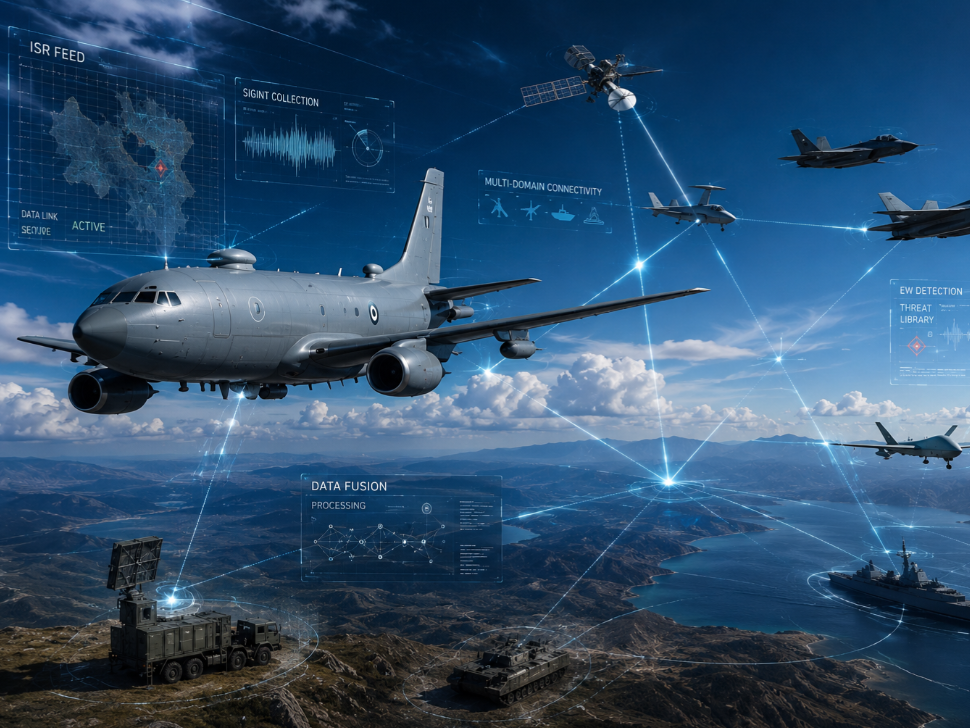
Perhaps the most significant development shaping airborne ISR and electronic warfare is the growing emphasis on multi domain operations. Modern defence organisations increasingly recognise that information collected by air assets delivers maximum value only when it can be shared rapidly across land, maritime, cyber, and space domains.
Historically, airborne surveillance platforms often operated within relatively isolated mission environments, collecting intelligence that would later be distributed to commanders and analysts. Today, operational requirements demand significantly greater speed. Intelligence gathered by an aircraft may need to be transferred immediately to a naval task group, an artillery unit, an air defence battery, or a command centre operating hundreds of miles away.
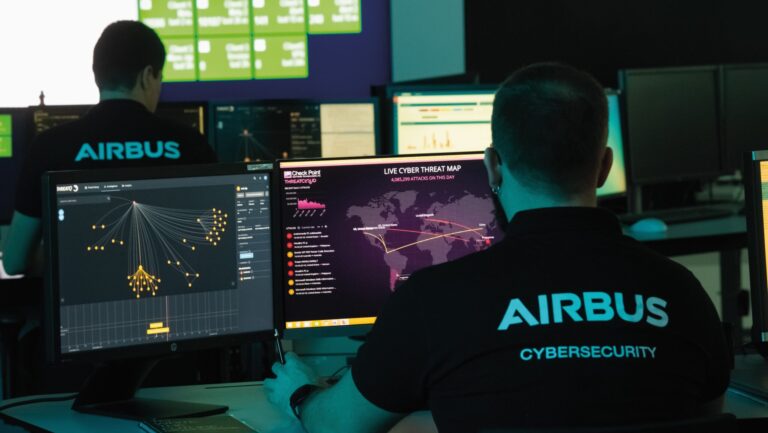
This requirement is driving investment in open architectures, common data standards, advanced mission systems, and resilient communications networks capable of supporting real time information exchange. Sensors are increasingly being viewed as nodes within a larger information ecosystem rather than standalone capabilities.
For electronic warfare systems, the implications are equally significant. Threat detection data collected by one platform may be used to improve the survivability of multiple assets operating across the battlespace. Radar emissions identified by an ISR aircraft can potentially support targeting decisions, mission planning, force protection measures, or broader operational intelligence assessments.
Companies such as Leonardo, Leidos, Elma Electronic, Panasonic, and Motorola Solutions all contribute technologies that support this broader vision of connected operations, whether through sensing, mission computing, communications, information processing, or operator access to data. As military organisations continue to pursue greater integration between domains, the ability to move information securely and rapidly will become just as important as the ability to collect it.
The future air battlespace is therefore unlikely to be defined solely by aircraft performance. Instead, competitive advantage will increasingly be determined by how effectively airborne systems contribute to a wider network of sensors, platforms, and decision makers operating across the entire force.
Communications as the operational link
Airborne ISR loses value if information cannot be shared securely and quickly. Motorola Solutions is relevant here through tactical communications infrastructure rather than aircraft sensors directly. In September 2025, Motorola Solutions and Nokia announced a collaboration to deliver a containerised tactical communications network solution for UK defence agencies, combining TETRA, 4G and 5G, with Silvus MANET backhaul supporting secure video sensors, uncrewed systems, situational awareness and command and control.
This is relevant to air ISR because the value of airborne sensing depends on connectivity into the wider force. Uncrewed systems, forward units and command centres all need resilient pathways for data exchange. As air and land networks converge, tactical communications become part of the ISR system itself.
Procurement implications
For defence buyers, the priority is increasingly architectural. The most effective air ISR and electronic warfare systems will not be defined by one sensor, one aircraft or one supplier. They will be defined by how well sensors, processors, radios, electronic warfare systems, rugged devices and command networks work together.
Leonardo brings clear relevance in integrated sensing, communications and electronic warfare. Leidos contributes airborne ISR integration and special mission aircraft experience. Panasonic supports the deployed computing layer. Elma Electronic provides rugged open architecture mission computing. Motorola Solutions strengthens tactical communications and network resilience.
The direction of travel is clear. Airborne ISR is becoming a connected technology stack. The aircraft remains important, but the advantage lies in what the system can detect, how quickly it can process information, how securely it can share data and how reliably it can operate under electronic pressure.