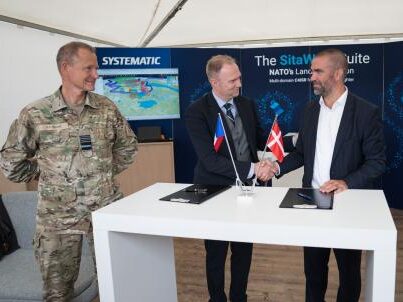

Thales and Danish software company Systematic have formed a strategic partnership focused on strengthening integrated air defence capabilities for the Danish Armed Forces.
Announced during DALO Industry Days in Herning on 19 August, the agreement combines Thales’ air defence technologies with Systematic’s command-and-control software. The companies intend to support Danish requirements covering Air Command and Control and Surface-Based Air Missile Defence.
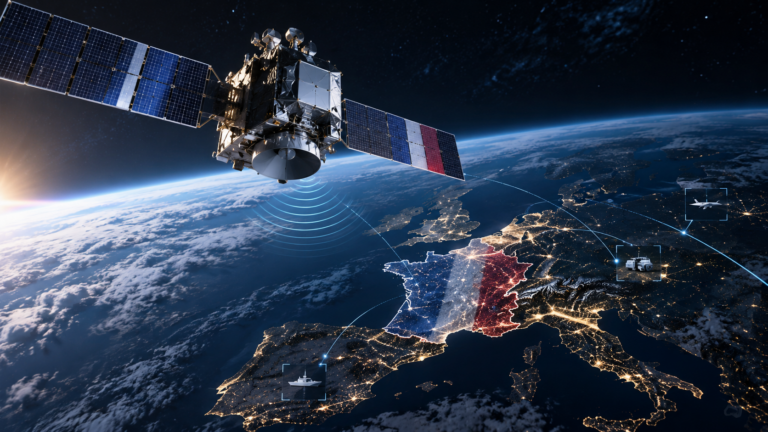
The partnership reflects the growing importance of connecting individual sensors, command systems and effectors within an integrated air defence architecture. Modern air threats now range from conventional aircraft and cruise missiles to ballistic missiles and uncrewed systems, placing greater emphasis on command-and-control systems capable of coordinating several layers of defence.
Integrating air defence systems
Thales said the collaboration could support the integration and coordination of systems including SAMP/T NG alongside other air defence capabilities. Systematic will contribute its experience in defence command-and-control software.
Importantly, the partnership announcement itself does not constitute confirmation that Denmark has selected SAMP/T NG or awarded the companies a specific air defence procurement contract. Instead, the agreement establishes a framework through which the companies intend to address Danish requirements and support the Danish Ministry of Defence Acquisition and Logistics Organisation.
The partnership will also support interoperability with NATO. Thales said the work is relevant to NATO Air Command and Control and Surface-Based Air Missile Defence programmes, where the ability to exchange information between national and allied systems is central to establishing a common defensive picture.
European integration priorities
Denmark has been strengthening its air and missile defence capabilities alongside other European NATO members, with procurement increasingly shaped by both national requirements and the need to operate within allied networks.
For manufacturers, that places greater emphasis on open interfaces, command-and-control integration and compatibility with systems supplied by different companies and countries.
Thales and Systematic said their cooperation is also intended to develop industrial capability within Denmark and create opportunities for local participation.
From a defence procurement perspective, this aspect is increasingly relevant. European governments are not simply evaluating individual interceptors or radar specifications; programmes are also being assessed according to sovereignty, local industrial participation, through-life support and their ability to integrate with NATO architectures.
The Danish partnership therefore illustrates a broader change in air defence procurement. Individual systems remain important, but their operational value increasingly depends on how effectively sensors, command-and-control software and effectors can exchange information and operate as part of a layered multinational network.