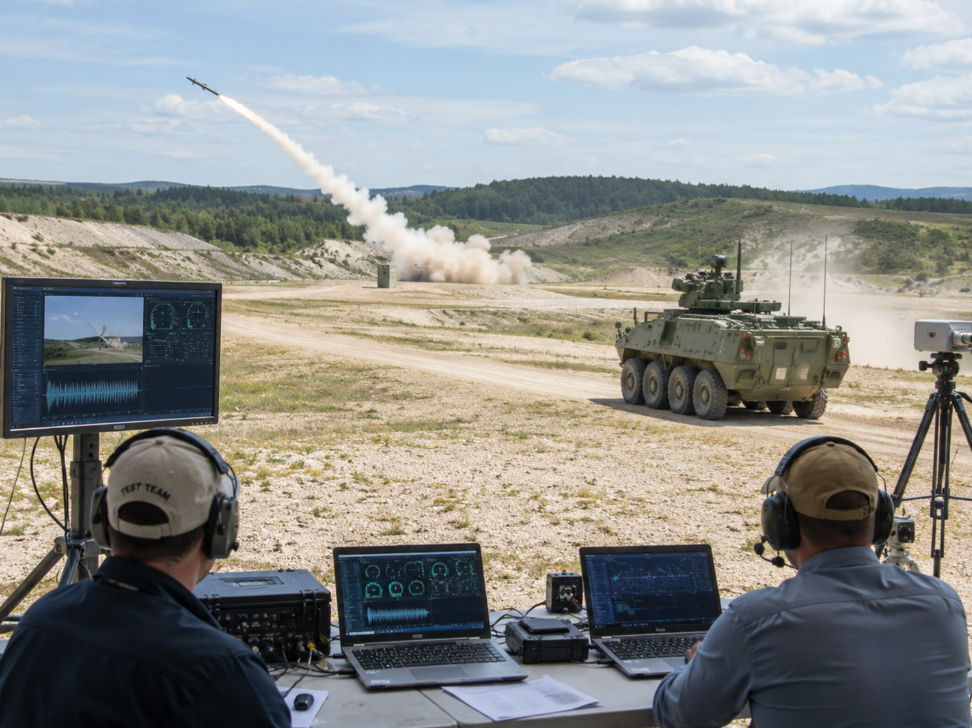

Rebecca Spayne analyses how and why defence is no longer struggling to test equipment. It is struggling to test assumptions
Defence has a testing problem, but not the one most people think.
Defence has never invested more seriously in test and evaluation than it does today. Across allied nations, major programmes are supported by trials activity, operational analysis, modelling, simulation, digital engineering and increasingly sophisticated evidence gathering. Yet recent conflicts have exposed a difficult truth. The weakness is not always that equipment is tested poorly. It is that equipment can be tested against assumptions that are already ageing by the time a capability enters service.
This matters because modern military capability is no longer defined only by hardware. Software, autonomy, artificial intelligence, electronic warfare, cyber resilience, sensor fusion and network performance now shape the operational value of almost every platform. A system may perform exactly as specified in a controlled test environment yet face a radically different threat landscape once deployed. The UK Ministry of Defence describes test and evaluation as the disciplined collection and analysis of evidence about system behaviour and performance, intended to understand, improve and assure that equipment is safe and fit for purpose. That definition is increasingly important because defence must now evaluate behaviour, not only performance.
The central challenge is therefore shifting. Defence organisations are no longer asking only whether a platform meets specification. They are asking whether the specification still reflects operational reality. In a battlespace shaped by rapid adaptation, electronic attack, uncrewed systems and software change, this is the more difficult question. Simulation, wargaming and advanced trials are becoming essential because they allow defence to test not just systems, but assumptions.
The End of the Linear Procurement Mindset
Traditional acquisition was built around a linear model. Requirements were written, systems were developed, trials were conducted and equipment entered service. That model was not perfect, but it suited an era in which the relationship between threat, technology and doctrine moved at a pace defence institutions could broadly manage. Today, that relationship is unstable.
The war in Ukraine has shown how quickly drones, counter drone systems, electronic warfare and software enabled tactics can evolve in combat. Operations in the Red Sea have reinforced the pressure placed on air defence, maritime sensing and command networks by persistent missile and drone threats. These examples are not useful because they offer simple lessons, but because they demonstrate the speed with which assumptions can become outdated.
This is where test and evaluation must evolve. The most dangerous risk in future capability development may not be technical failure, but false confidence. A platform can pass trials while the concept behind it remains too narrow. A digital system can function correctly while its network dependencies remain vulnerable. An autonomous capability can perform well in a designed scenario while behaving unpredictably in an environment shaped by deception, degraded communications or adversary adaptation.
The United States Department of Defense recognised this pressure in its 2025 Modelling and Simulation for Test and Evaluation Guidebook, which focuses on the use, development, verification, validation and accreditation of modelling and simulation in support of developmental test objectives. The existence of such guidance reflects a wider shift toward using simulation as an evidence generating discipline within formal evaluation, not merely as a training aid or visualisation tool.
Why Wargaming Has Returned to Serious Defence Planning
Wargaming has returned to prominence because it can examine what technical trials often cannot: choice, behaviour and consequence. Future operations are unlikely to unfold as isolated platform engagements. They will involve commanders making decisions across land, sea, air, cyber, space and the electromagnetic spectrum, often with incomplete information and under time pressure. Testing a sensor or platform may tell defence what it can do. Wargaming helps examine what people might do with it.
This is why modern wargaming has become far more than a classroom exercise. It increasingly combines operational research, modelling, simulation, behavioural insight and scenario design to test concepts before they become doctrine or procurement commitments. In 2025, the UK Ministry of Defence showcased integrated wargaming expertise at NATO’s Concept Development plus Wargaming Initiative conference, noting the value of sharing fresh insights from concept development and wargaming across allies.
The point is not to predict a future conflict with certainty. The point is to uncover weaknesses that conventional planning may miss. A well designed wargame can reveal where command structures are too slow, where data flows are fragile, where logistics assumptions are unrealistic or where a new capability creates unexpected dependencies. Its value is often found in the questions it raises, not the answers it produces.
Cranfield University is particularly relevant in this context because its defence simulation and modelling work addresses the design, development, procurement, use and management of models and simulations for experimentation, training, testing, analysis and assessment of military forces, systems and equipment. Its academic role is important because future test and evaluation requires more than engineering competence. It requires systems thinking, operational analysis and the ability to understand how people, technology and organisations interact.