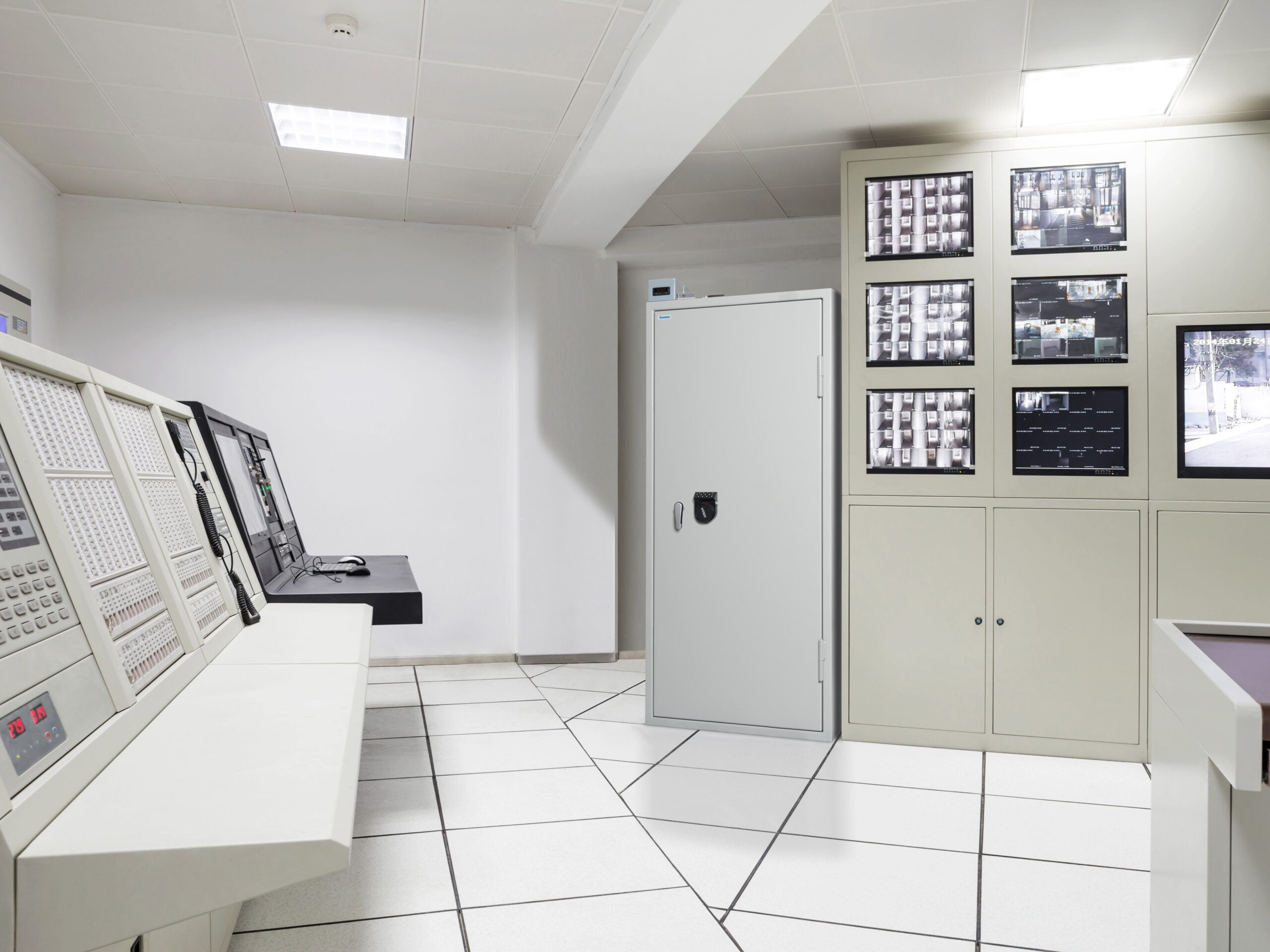

In this article Jacob Duhan, Head of Defence at Gunnebo Safe Storage discusses how cooperation in defence relies on a series of interconnected layers that work collectively to reduce risk and enable forces to operate together effectively.
Defence organisations recognise how policy, training and procedural discipline must all function consistently if risks are to be controlled, yet these measures alone cannot provide complete assurance.
Physical safe storage introduces structure, predictability and measurable performance. As nations increasingly work side by side, whether through joint operations, shared facilities or coordinated procurement programmes, the importance of stable and compliant physical safeguards for sensitive operational tools becomes more pronounced.
In settings where responsibilities overlap and standards differ; certified and resilient storage environments help prevent gaps from forming between administrative and operational expectations.
Physical Measures for International Consistency
Defence cooperation across borders has grown steadily, with multinational missions, integrated logistics chains and joint readiness initiatives placing new demands on the management of combat resources and protective gear.
Each participating nation brings its own procedures, terminology, regulatory constraints and risk assessments. Procedural differences are manageable when roles are clearly defined, but challenges arise when the practical realities of storage, access and accountability for shared field equipment must be aligned.
Under these circumstances, physical safeguards become one of the few elements capable of creating uniformity where variation is otherwise unavoidable.
Certified strong rooms, secure vaults and controlled-access environments provide documented and independently verified levels of protection. Their performance is not subject to local interpretation, which means they introduce an objective layer to support interoperability without favouring one framework over another. This is particularly significant when sensitive operational tools are handed over between forces or moved through shared facilities.
A certified physical environment offers a common reference point, giving all parties clarity on the conditions under which defence stockpiles are stored. It supports the development of joint procedures that align with recognised international standards rather than relying on improvised compromises.
In contexts where forces rotate or where multinational headquarters oversee temporary deployments, physical storage also supports continuity. Personnel may change frequently, and procedural familiarity varies among national contingents.
A stable and recognisable physical framework reduces the need for repeated retraining and provides reassurance that the facility itself upholds baseline expectations, even when practice, experience or doctrinal methods differ. It creates a dependable environment within which nations can meet their obligations without placing disproportionate pressure on individual teams.
Operational Requirements and Mobile Infrastructure
Operational deployments introduce additional complexity where combat resources and protective gear must be secured in permanent armouries or at temporary bases, forward positions and transit locations where infrastructure may be limited.
These situations are routine in contemporary operations, and the ability to maintain compliant storage conditions for critical field equipment away from national territory has become an operational requirement.
Mobile vaults and containerised secure storage units provide a controlled environment that preserves the principles of certified protection without reliance on fixed infrastructure.
Their purpose is to transport sensitive operational tools while carrying forward the same level of assurance associated with permanent facilities. In multinational settings, this mobility supports interoperability, as a consistent standard of physical protection can accompany forces wherever they deploy. When several nations adopt comparable approaches, there is shared understanding of access control, structural resilience and audit expectations, reducing uncertainty in combined operations.
Such infrastructure is particularly valuable when defence resources move across borders or pass through host-nation facilities where procedures differ from those of the deploying force. Mobile units allow organisations to retain authority over storage conditions during transport or staging, ensuring compliance is upheld even when local infrastructure does not meet required standards.
They provide a practical means of maintaining accountability in situations where responsibility transfers frequently or where environmental conditions shift rapidly.
Controlled-access environments strengthen oversight further, where electronic locking systems and audit trails create a record of activity independent of local administrative processes.
Whether in permanent bases or temporary facilities, this supports verification, inspection and incident response, and reduces reliance on manual documentation, which can be difficult to enforce consistently. For multinational contingents, this traceability contributes to clearer coordination by offering an objective point of reference for all participating forces.
Interoperability, Assurance and the Effect of Multiple Layers
Interoperability is not defined solely by the physical environment, yet physical measures influence how effectively other layers perform.
Policies require facilities capable of supporting the controls they mandate. Training requires environments that are structured and consistent so procedures relating to combat resources and protective gear can be applied reliably. Compliance depends on documentation and predictable safeguards that align with formal standards.
When these conditions are present, the supporting layers become stronger; when they are absent, even the most comprehensive administrative systems face limitations.
Many nations address this by engaging actively with defence industry organisations and standard-setting bodies, particularly within Europe. Participation in such forums helps maintain alignment between technical capability, regulatory expectations and operational realities.
It ensures secure storage solutions for field equipment reflect practical requirements, and that they remain relevant to the demands of both national and multinational defence activity. Collaboration with defence stakeholders also allows refinements to be guided by operational feedback, particularly in areas such as mobility, access management and interoperability.
The objective is to ensure each one reinforces the others. Physical infrastructure provides stability. Procedures provide consistency. Regulations provide accountability. Training provides competence.
Together they reduce the likelihood that individual weaknesses will align. Within this structure, physical storage plays a distinct role because it provides the environment in which the other layers are implemented. Its consistency supports decisions taken at policy level and the behaviours expected at operational level.
As multinational cooperation becomes an increasingly significant feature of defence activity, the requirements placed on aligning how combat resources are secured will continue to reflect this broader context.
The physical layer will remain central, offering clarity where procedural expectations intersect and compliance obligations differ. It provides a foundation on which partners can build confidence, even when responsibilities, resources and national standards vary.
In contributing to these shared aims, Gunnebo Safe Storage continues to support defence organisations by strengthening the physical layer that underpins interoperability across multinational defence frameworks.