
Katie Tracy takes a look at how military satellites are becoming the backbone of modern defence operations, where war is no longer just fought on the ground
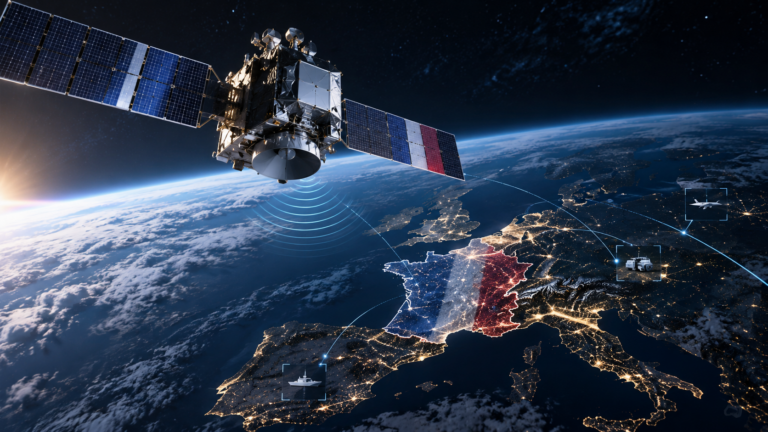
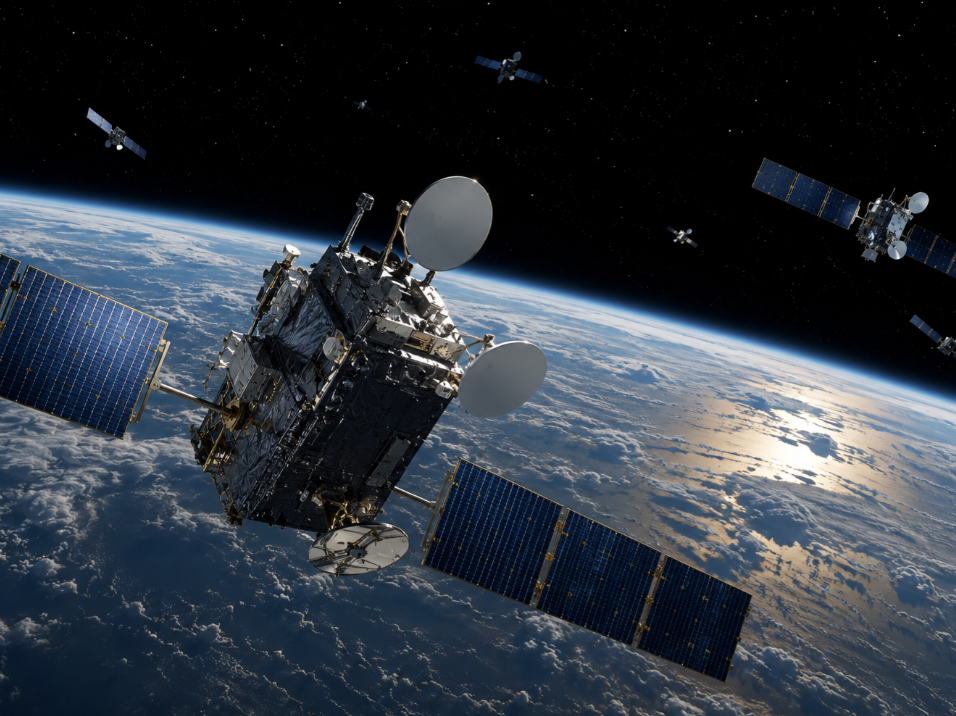
Few technologies have had a greater impact on modern military operations than satellites. What was once viewed primarily as a strategic intelligence capability has evolved into a fundamental component of almost every military activity, supporting communications, navigation, intelligence gathering, targeting, logistics, and command and control across the globe.
The importance of military satellites has grown in parallel with the increasing digitisation of defence operations. Modern armed forces rely upon uninterrupted access to information, often across vast distances and challenging environments. Whether supporting deployed personnel, naval task groups, airborne platforms, or unmanned systems, satellites provide the connectivity and situational awareness required to operate effectively in increasingly complex theatres.
This dependence has elevated space from a supporting domain to a critical operational environment in its own right. Defence planners increasingly view space-based infrastructure as essential national security capability, with resilience, survivability, and network integration becoming just as important as the satellites themselves.
At the same time, technological advances are reshaping what military satellites can achieve. Smaller spacecraft, higher performance payloads, improved onboard processing, advanced communications architectures, and more sophisticated ground infrastructure are collectively expanding the role of space assets within modern defence ecosystems.
Communications Remain the Foundation
Secure communications continue to represent one of the most important military applications for satellite technology. Armed forces require reliable connectivity across dispersed operations, particularly in regions where terrestrial communications infrastructure is unavailable, degraded, or vulnerable to disruption.
Modern satellite communications systems provide significantly more than basic voice and data transmission. Contemporary military networks increasingly support high bandwidth applications including real time intelligence sharing, video transmission, sensor integration, and distributed command and control functions.
The growth of network centric warfare concepts has increased demand for resilient communications architectures capable of supporting multiple platforms simultaneously. Military organisations increasingly seek systems that can maintain connectivity even under contested conditions, where jamming, electronic attack, or cyber threats may be present.
Companies such as MCL contribute to this area through advanced radio frequency technologies and microwave communications solutions that support secure and reliable connectivity across defence environments. The ability to move data efficiently between space, air, land, and maritime assets is becoming increasingly important as military forces pursue greater operational integration.
Building Resilience into Space Networks
The growing strategic importance of military satellites has inevitably increased concerns surrounding resilience. Traditional satellite architectures often relied upon a relatively small number of highly capable assets operating in geostationary orbit. While these platforms remain important, modern defence strategies increasingly emphasise diversification and redundancy.
Distributed satellite constellations, low Earth orbit architectures, and hybrid communications networks are creating new opportunities to improve survivability. Rather than depending upon a limited number of nodes, future systems are likely to distribute capability across larger numbers of interconnected platforms.
This approach reduces vulnerability while providing greater flexibility. If one satellite becomes unavailable, network traffic can potentially be rerouted through alternative assets. Advances in software defined networking and intelligent communications management are supporting this transition towards more resilient architectures.
The supporting electronics infrastructure plays a critical role in enabling this capability. Organisations such as Linde Electronics provide specialised electronic systems that support defence and aerospace applications where reliability and operational continuity are essential requirements. In space environments, where maintenance is impossible and failures can have strategic consequences, component quality and system robustness remain fundamental considerations.
The Growing Demand for Space Based Intelligence
Communications may represent the most visible application of military satellites, but intelligence gathering has become equally significant. Advances in sensor technologies are enabling satellites to collect increasingly detailed information across multiple domains.
Electro optical imaging, infrared sensing, synthetic aperture radar, signals intelligence, and electronic surveillance capabilities now provide military organisations with unprecedented levels of situational awareness. Importantly, these technologies can operate continuously and across vast geographical areas, providing strategic visibility that would be difficult to achieve through terrestrial systems alone.
The challenge is no longer collecting information. It is processing, distributing, and exploiting the vast quantities of data generated by modern sensors. This has increased focus on onboard processing capabilities, edge computing architectures, and advanced data management systems capable of reducing latency and accelerating decision making.
Satellite operators increasingly seek systems capable of analysing information before transmission, reducing bandwidth requirements and improving responsiveness. The result is a shift towards more intelligent spacecraft capable of contributing directly to operational decision making rather than simply acting as collection platforms.