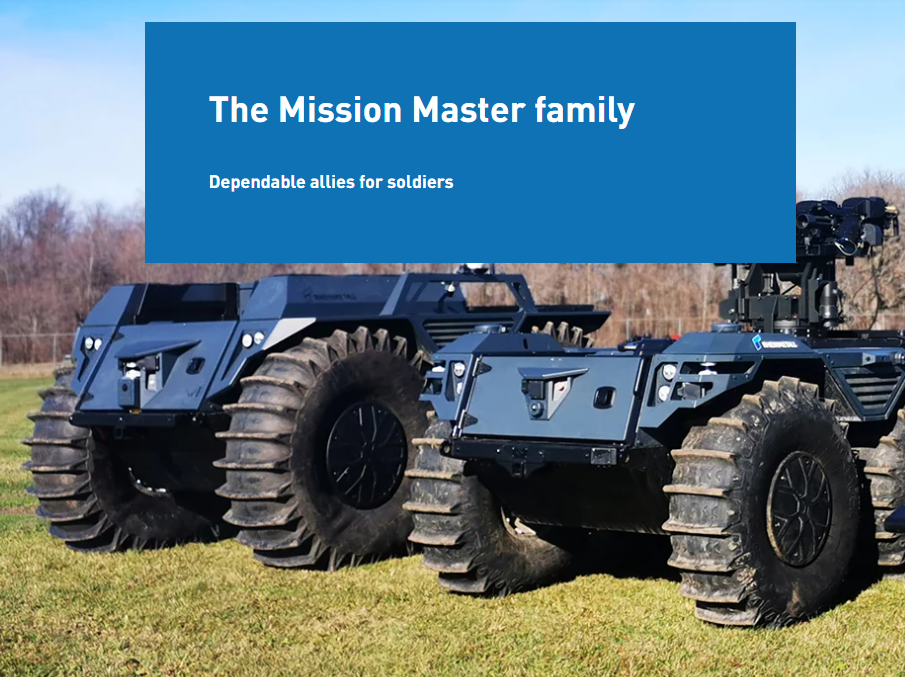

American Rheinmetall has received a $7.28 million contract to supply the US Marine Corps with Mission Master SP autonomous unmanned ground vehicles, extending a programme of testing and development between the manufacturer and the service.
Announced on 10 September, the procurement covers 12 Mission Master SP autonomous ground vehicles, five amphibious kits and supporting equipment. The acquisition is being carried out through the US Defense Logistics Agency, with ADS Inc acting as prime contractor in support of the US Marine Corps Warfighting Laboratory.
The vehicles will be used for further operational evaluation, experimentation and capability development as the Marine Corps examines autonomous logistics and expeditionary mobility concepts.
Amphibious autonomous operations
The Mission Master SP vehicles incorporate Rheinmetall’s PATH autonomy architecture, which is designed to provide autonomous navigation independently of a specific vehicle platform. The latest configuration also incorporates modular payload integration and additional vehicle developments resulting from previous Marine Corps trials.
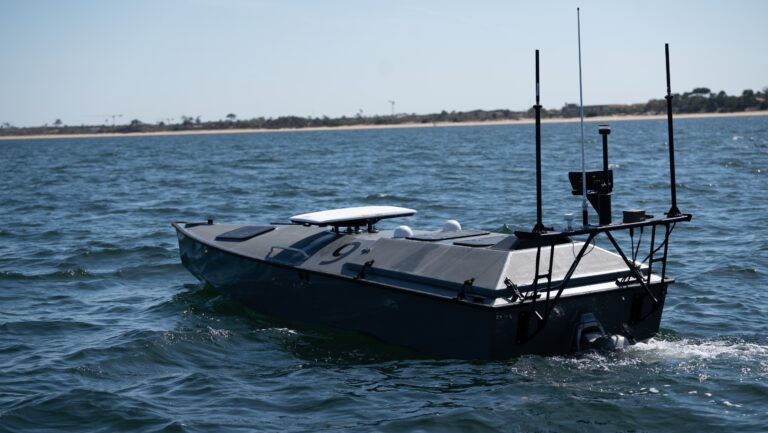
A significant part of the contract is the inclusion of Rheinmetall’s Marine Kit. This modification is intended to support extended amphibious operation, allowing the vehicles to participate in missions that transition between littoral and land environments.
The package also covers engineering support, logistics, technical documentation, operator training and acceptance testing. American Rheinmetall will lead the work in the US, supported by Rheinmetall Canada.
The contract follows more than four years of cooperation with the Marine Corps. Rheinmetall says previous activities have included operational trials, live-fire experimentation and the integration of its Fieldranger remote weapon station.
Autonomy moves towards field use
For defence procurement organisations, the order illustrates how uncrewed ground vehicles are moving beyond technology demonstrations towards sustained military experimentation with defined logistics and support arrangements.
The relatively small fleet also gives the Marine Corps scope to assess how autonomous vehicles might support dispersed forces without committing immediately to a large production programme.
Rheinmetall identifies logistics, distributed operations and reducing personnel exposure as potential applications. Amphibious capability is particularly relevant to Marine Corps operating concepts, where equipment may need to move between ships, shorelines and dispersed positions.
The programme could also influence Rheinmetall’s longer-term US manufacturing strategy. The company is developing an Advanced Land Autonomy Center of Excellence in Maine for PATH integration, production, sustainment and lifecycle support, although the company says the latest contract does not itself require an expansion of the facility.