
Rheinmetall and Hensoldt have successfully integrated passive radar technology into a networked air defence system during the German Air Force’s Timber Express 2026 exercise.
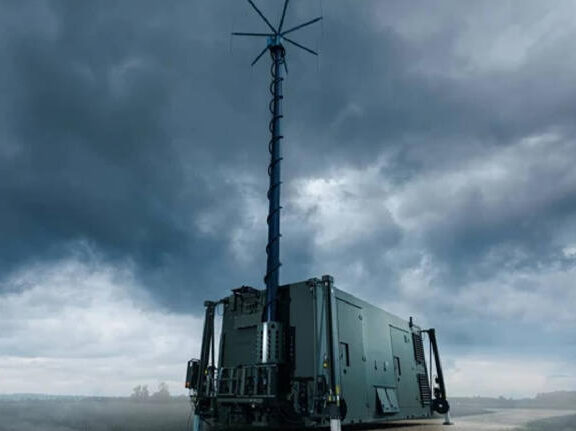
During the demonstration in Manching, Germany, air surveillance data generated by Hensoldt’s Twinvis passive radar was integrated into Rheinmetall’s Skymaster command and weapon engagement system, which was controlling a Skynex air defence battery.
The trial was conducted under NATO networking conditions and demonstrated how passive and active sensors could contribute to a common air picture.
Twinvis Adds Passive Detection Capability
Unlike conventional active radar, passive radar does not transmit its own radio-frequency signal. Instead, Twinvis uses existing electromagnetic emissions within the environment to detect and track airborne targets.
This allows airspace surveillance to be conducted without producing the distinctive emissions associated with an active radar system.
During Timber Express, data from Twinvis was fused and correlated within NATO’s Link 16 network before being integrated into the wider air defence picture.
Rheinmetall said Skymaster can combine information from active radar, passive radar and electro-optical sensors, giving operators access to multiple detection methods within the same command-and-control environment.
Technology Could Support Skyranger and Counter-UAS
The companies said passive sensing could strengthen the survivability of distributed air defence networks while supporting emissions control requirements.
The technology could also provide an additional surveillance layer for the protection of military units, infrastructure and other high-value assets.
Results from the exercise are expected to support further integration of passive sensing technology with Rheinmetall systems, including stationary Skynex installations, mobile Skyranger air defence platforms and Skyspotter counter-UAS solutions.
The demonstration reflects the increasing focus on distributed sensors and networked air defence as armed forces seek systems capable of detecting emerging aerial threats while reducing their own electronic signature.