

The return of high-intensity warfare to European soil is profoundly reshaping Western military doctrines. Today’s battlefields now feature unprecedented sensor density, a profusion of long-range firepower, the widespread use of tactical drones and increasing transparency in theatres of operation.
In this congested environment, the modern approach to ground combat is evolving rapidly. Troop concentrations have become a vulnerability, electromagnetic emissions are constantly detectable, and survivability depends as much on mobility and stealth as it does on armoured protection. Armed forces must now combine range, precision, dispersal, connectivity and resilience to maintain their freedom of action.
This transformation does not apply solely to military operations: it is also driving a major industrial and technological reconfiguration. The demand for ammunition, autonomous systems, collaborative architectures and active protection solutions is redefining the capability priorities of European states and their defence industrial base.
Against this backdrop, Eurosatory 2026 is shaping up to be the global platform where the three pillars of this transformation can be explored: long-range firepower, distributed ground manoeuvre and air mobility in hostile environments.
I. REMOTE WARFARE: RANGE, PRECISION AND SATURATION
THE STRATEGIC RETURN OF LONG-RANGE ARTILLERY
The war in Ukraine has confirmed the resurgence of artillery and deep-strike capabilities as central to military operations. Systems capable of striking targets several hundred kilometres away not only neutralise frontline units but also disrupt the enemy’s entire operational structure.
This development is prompting European countries to accelerate their long-range strike programmes. In France, the FLP-T (Frappe Longue Portée Terrestre) programme aims to develop strike capabilities beyond 150 km, with the prospect of extending this to several hundred kilometres by 2030.
The transformation of conventional artillery
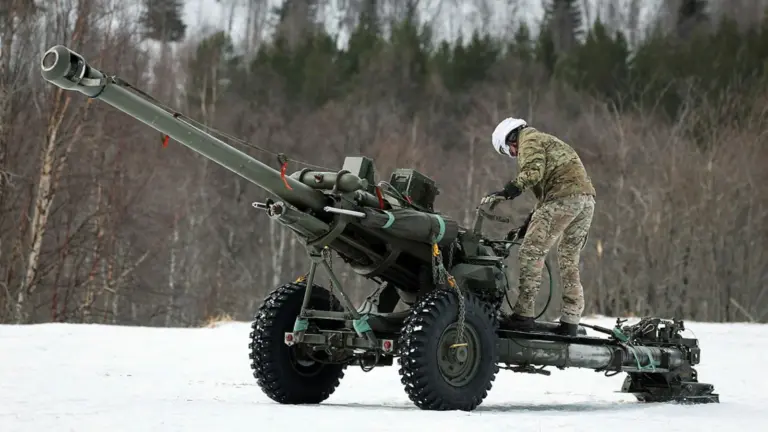
Conventional artillery nevertheless remains a cornerstone of ground combat. Systems such as the CAESAR (by KNDS France) illustrate the priority given to mobility and speed of execution in a context of constant counter-battery fire. The ‘shoot and scoot’ doctrine is becoming a pre-requisite for survival.
But beyond technological performance, high-intensity conflict poses above all an industrial challenge. Recent conflicts show that no army can sustain a prolonged engagement without massive ammunition production capabilities. Industrial resilience thus becomes a determining factor in military superiority.
Drones, loitering munitions and saturation
Recent conflicts have also highlighted the importance of drones and remotely operated munitions. These inexpensive, accurate and easily deployable systems are profoundly changing the economics of combat. They combine low cost, terminal precision and operational flexibility.
Drones are no longer used solely for observation: they are becoming effectors capable of striking enemy forces directly whilst remaining under human control. This convergence of intelligence and strike capabilities significantly reduces engagement times.
The logic of saturation is also becoming central: saturation of defences through sheer weight of numbers; information saturation through the proliferation of sensors; and economic saturation by forcing the adversary to use costly systems against inexpensive drones.
Constant detection and the imperative of concealment
Increased range and accuracy automatically expose firing systems to a rapid counterattack. Indeed, modern counter-battery radars can pinpoint a firing position within seconds. Above the battlefield, tactical and MALE drones – and soon low-Earth orbit satellite constellations – provide near-constant surveillance. Added to this are now electronic eavesdropping systems on the ground, in the air or in orbit. On a battlefield that has become largely transparent, the ability to hide has once again become fundamental.
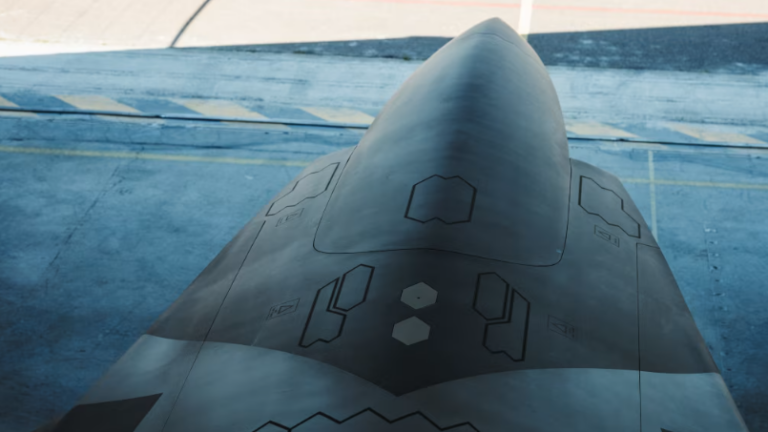
In response to this threat, armed forces are investing heavily in multispectral camouflage, decoy and deception techniques, signature reduction systems and troop dispersal.
Survivability now rests on three complementary principles: mobility, dispersal and the reduction of thermal, visual and electromagnetic signatures. An artillery system that remains stationary for more than a few minutes becomes vulnerable. The ‘fire, manoeuvre, disperse’ doctrine is no longer merely a principle, but a prerequisite for survival.
II. GROUND OPERATIONS: SURVIVABILITY, DISPERSAL AND ROBOTISATION
THE END OF MASS CONCENTRATION
The increased range of strikes and constant surveillance of the battlefield are challenging traditional models of troop concentration. Armies are moving towards smaller, more mobile units capable of operating across a wider area. New land vehicles are designed as interconnected platforms rather than isolated systems.
The Franco-German MGCS (Main Ground Combat System) programme illustrates this doctrinal shift: rather than simply designing a new tank, the aim is to create a true system of systems combining manned platforms, drones, sensors, remotely operated effectors and native digital connectivity.
With troops more scattered, the need for coordination is significantly higher. Digital systems act as amplifiers of efficiency, enabling dispersed units to maintain tactical coherence. Connectivity acts as an amplifier of coherence for geographically fragmented units.
However, this reliance on digital networks also creates new vulnerabilities: cyberattacks, jamming, electronic warfare and communication breakdowns. Network resilience and the ability to operate in a degraded environment are therefore essential.
Signature reduction and stealth
Modern mobility is no longer based solely on speed or off-road capability. It now incorporates stealth as a fundamental component of survivability. To this end, manufacturers are developing solutions for multispectral camouflage (Saab’s ULCAS solutions or the European ACROSS project), thermal reduction, silent hybrid propulsion (Arquus, John Cockerill and Texelis are working on hybrid powertrains offering silent driving phases and autonomous power supply for on-board systems) and the containment of electromagnetic emissions.
The hybridisation of military vehicles opens up new possibilities, particularly for stealth operations and missions under constant threat from drones and infrared sensors.
The rise of ground robots
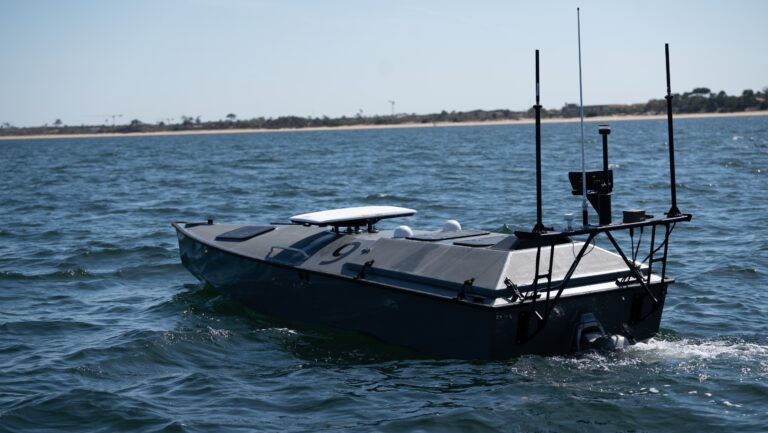
Battlefield robotization is set to be one of the major developments in the coming years. Ground-based robots can shift risk away from human personnel to platforms that can be lost in combat and are more easily replaceable. These systems can carry out reconnaissance, provide fire support, handle logistics, conduct medical evacuations and deliver replenishment supplies under fire.
Active protection and anti-drone measures
With the proliferation of anti-tank threats and armed drones, passive armour is no longer sufficient. Active protection systems (APS) are gradually becoming indispensable. These include soft-kill systems designed to conceal the vehicle and hard-kill systems designed to intercept threats, capable of physically intercepting them.
At the same time, anti-drone warfare is becoming a top priority. Modern systems now incorporate radars, acoustic sensors, jammers, lasers and interceptor drones (such as MBDA’s SkyWarden). These ‘mobile protection bubbles’ are becoming essential for enabling high-intensity ground operations.
III. AIR MOBILITY DURING HIGH INTENSITY COMBAT:
INCREASING VULNERABILITY FOR HELICOPTERS
The conflict in Ukraine has exposed the increasing vulnerability of helicopters to modern surface-to-air defences, but also to drones and anti-tank missiles. Airborne operations must now operate in threat-saturated environments where air superiority is never guaranteed in the long term.
Large-scale short-range deployments are becoming much riskier, necessitating new operational approaches: penetration at very low altitude, night operations, multi-axis operations, and reducing exposure time to a minimum.
The development of Manned-Unmanned Teaming (MUM-T)
To reduce crew exposure, militaries are increasingly developing concepts for cooperation between helicopters and drones. Drones can reconnoitre dangerous areas, jam defences, designate targets and strike directly. This ‘Manned-Unmanned Teaming’ approach is gradually transforming airmobile operations into distributed collaborative systems.
New platforms and new architectures
Armed forces are also exploring new platforms capable of increasing speed, range and survivability. Heavy cargo drones could revolutionise tactical logistics by enabling resupply, medical evacuation and support for isolated units, all without direct human exposure. At present, Europe’s navies are the most interested in drone-based logistics, with the French Airbus VSR700 and the British Leonardo Proteus. However, in the United States, Sikorsky unveiled the U-Hawk in 2025, a UH-60 Blackhawk converted into a high-capacity cargo drone.
Air mobility integrated into distributed manoeuvres
Air mobility is no longer merely a tool for large-scale assaults. It is becoming a means of ensuring flexibility and coherence for dispersed ground forces. Its effectiveness hinges on close coordination with long-range fire support, intelligence and distributed command systems. The objective is no longer to maintain sustained local air superiority, but to create temporary windows of opportunity before the enemy strikes back.
The return of high-intensity conflict in Europe marks a profound shift in the way ground combat is conceptualised. The modern-day battlefield is characterised by increasing transparency, an unprecedented density of threats and a constant acceleration in detection and strike cycles.
In this saturated environment, superiority no longer rests solely on the power of individual platforms, but on the ability to effectively integrate sensors, effectors, networks and autonomous systems within distributed and resilient architectures.
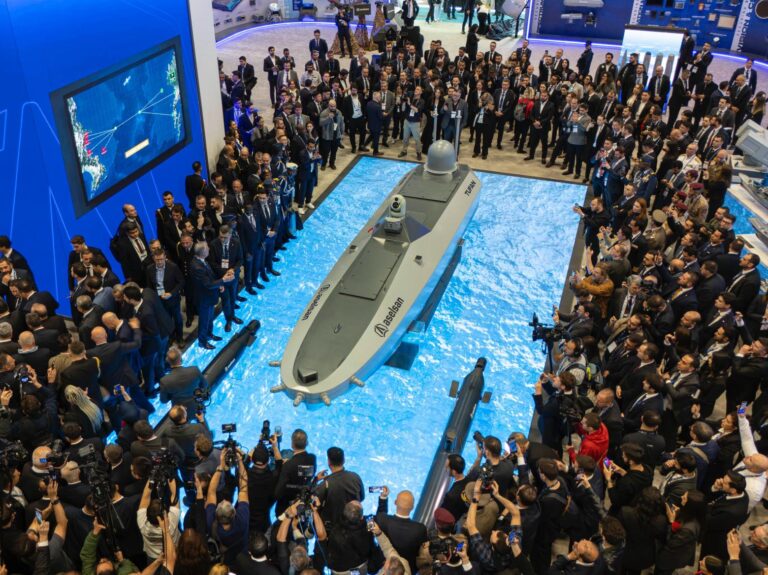
All these innovations, technologies and new operational doctrines will be presented and discussed at Eurosatory 2026, the world’s premier defence and security exhibition, taking place from 15 to 19 June at Paris Nord Villepinte Exhibition Centre.