
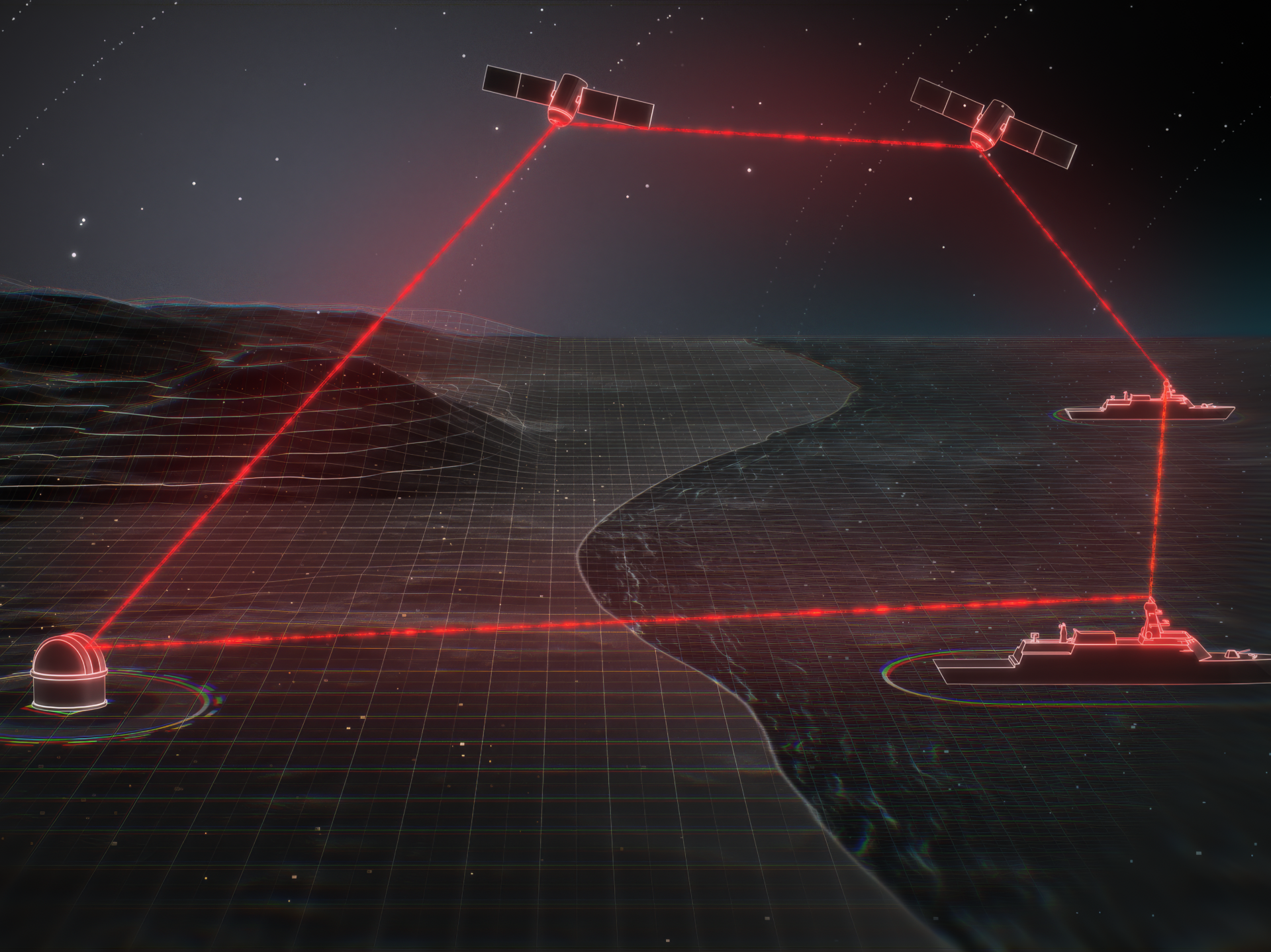

As Europe invests billions into sovereign space infrastructure, industry leaders warn that long-term autonomy will depend on one overlooked capability: optical connectivity.
The recent European Commission’s move to prioritise European operators in allocating spectrum for direct-to-device connectivity services, the development of Europe’s IRIS² constellation, and Germany’s planned €35 billion investment in defence space capabilities are all part of Europe’s strategic push to reduce its reliance on foreign space services.
Experts argue, however, that building infrastructure is only part of the challenge: for sovereign space networks to remain competitive, they have to utilize optical communication.
Laurynas Mačiulis comments:
#“If Starlink remains the only widely available commercial space network using optical communications, European operators will inevitably turn to it for superior speeds and data security. Optical data transfer stopped being a next-gen technology for specialized missions and is now becoming a matter of strategic and market advantage,” said Laurynas Mačiulis, CEO of Astrolight. “This is especially relevant as data and connectivity workloads become more demanding and time-sensitive, with mega-constellations, growing defense use of space, and plans for orbital AI datacenters driving this trend.”
Unlike traditional radio frequency, optical communication uses narrow and highly focused beams of light that enable up to 100 times higher data transmission rates and make links harder to detect, jam, or intercept. Laser communication can also reduce dependence on congested radio frequency spectrum, where operators face regulatory scrutiny, licensing delays, and interference bottlenecks.
According to Novaspace, global satellite connectivity demand will increase more than 11 times between 2024 and 2034. At the same time, less than 10% of all data generated in orbit currently reaches Earth, largely because of limited downlink bandwidth and scarce spectrum availability in conventional communication systems.
IRIS²
Europe is already moving in the direction of optical connectivity. IRIS², a planned European sovereign satellite constellation, is expected to use optical inter-satellite links, while HydRON is planned as a multi-orbit optical data transport network. But experts say a gap may remain between programme-level optical capability and wider commercial use.
“IRIS² and HydRON are important steps, but for optical communication to move from individual programmes to a comprehensive and resilient communications backbone, Europe must also build the industrial and commercial layer around them: proliferated inter-satellite optical links, optical ground stations, and user-segment technologies at scale,” said Dalius Petrulionis, CTO of Astrolight. “This infrastructure will enable real-time, secure data transfer from space to ground, supporting faster decision-making and emergency response, stronger defence capabilities, and commercial services with higher operational and economic value. It is a critical step for Europe to establish a competitive and autonomous presence in space for years to come.”
In its recent report, Building a European Competitive Edge in Space, the Centre for European Policy Studies argued that Europe has a highly capable but dispersed space ecosystem that still struggles to scale and compete in areas such as satellite manufacturing and secure connectivity.
“Europe already has the talent and strong technical foundations to lead in optical communication,” said Mačiulis. “The next step is making sure that, as Europe’s sovereign space architecture scales, the optical communication layer scales with it. That is how European critical and commercial users can get a competitive alternative to foreign space connectivity services.”