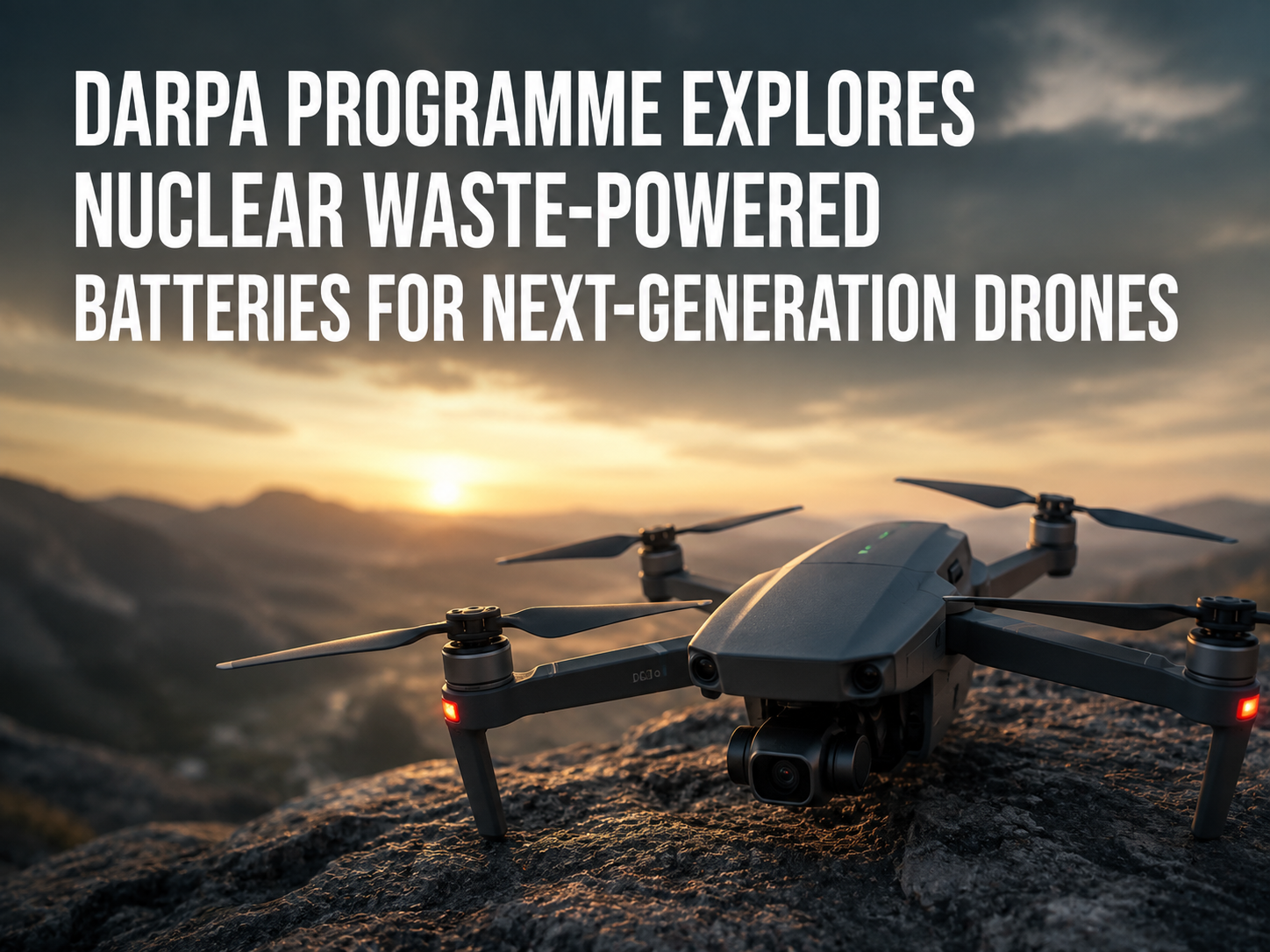

US defence research programme is investigating whether nuclear waste can be converted into long-life power sources capable of keeping drones and other autonomous systems operating for decades without conventional recharging.
The US Defense Advanced Research Projects Agency (DARPA) is supporting the development of a new generation of nuclear waste-powered batteries that could enable drones, satellites and other autonomous defence systems to operate continuously for up to 30 years.
The initiative, known as Rads to Watts, is focused on converting energy released through radioactive decay directly into electricity using radiovoltaic technology. Rather than relying on traditional chemical batteries, the programme aims to harness radioisotopes recovered from existing nuclear waste, including Strontium-90, to provide long-duration power for systems deployed in remote or contested environments.
Turning nuclear waste into persistent power
Morgan State University is leading the SYMPHONEE (Strontium-Yttrium Multi-junction PIN-based High-Density Output Nano-system for Extreme Environments) project under a $3.37 million DARPA contract. The research brings together Project Omega, Northrop Grumman, Pacific Northwest National Laboratory (PNNL), Applied Research Associates (ARA) and Widetronix.
The programme aims to significantly increase the power density of radiovoltaic systems while maintaining long operational lifespans. Researchers are targeting lightweight power sources capable of delivering more than 10 watts per kilogram, with a minimally viable prototype expected in early 2027.
Unlike conventional rechargeable batteries, radiovoltaic devices generate electricity continuously from the natural decay of radioactive isotopes. Developers say this could eliminate many of the logistical challenges associated with replacing or recharging batteries during extended military deployments.
Project Omega, one of the programme’s industrial partners, is developing generators using Strontium-90 extracted from existing nuclear waste rather than newly produced nuclear material. According to the company, existing stockpiles of radioactive waste could provide a substantial long-term resource while reducing the amount requiring permanent storage.
Defence applications
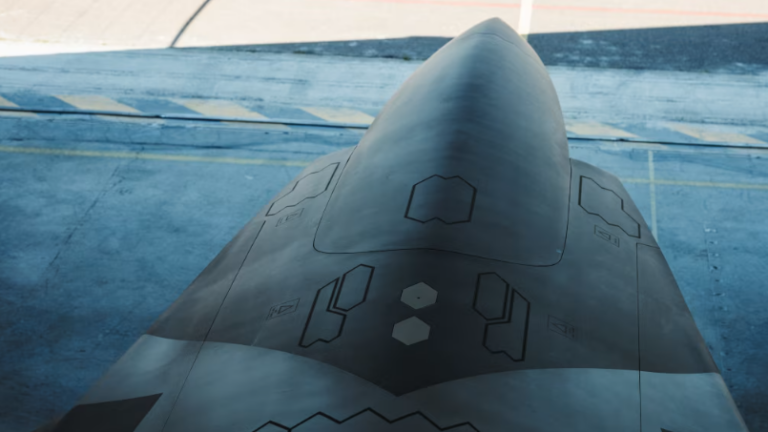
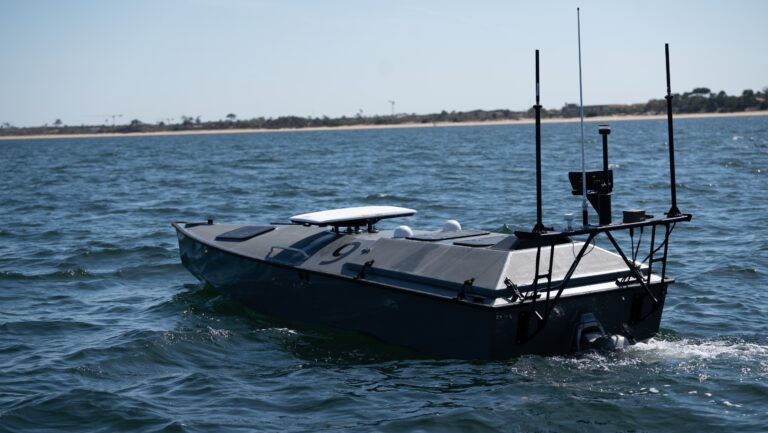
DARPA believes persistent power sources could transform operations across a range of defence applications, including unmanned aerial vehicles, autonomous maritime platforms, remote sensors and space systems. Long-endurance drones powered by radiovoltaic batteries could remain operational for years with minimal maintenance, reducing the logistical burden of battery replacement and enabling continuous surveillance or monitoring missions in inaccessible locations.
The technology is also expected to operate across extreme temperatures where conventional batteries typically experience reduced performance, making it suitable for demanding military environments. Despite the potential advantages, significant technical challenges remain. Researchers must demonstrate that the systems can achieve sufficient power output, maintain long-term reliability and meet safety requirements before they can transition into operational defence platforms.
If successful, the programme could provide a new approach to powering autonomous military systems while also finding productive uses for radioactive waste that would otherwise require long-term storage.