
Artificial intelligence is transforming defence networks, enabling faster threat detection and smarter operational decision-making writes Joseph Clarke
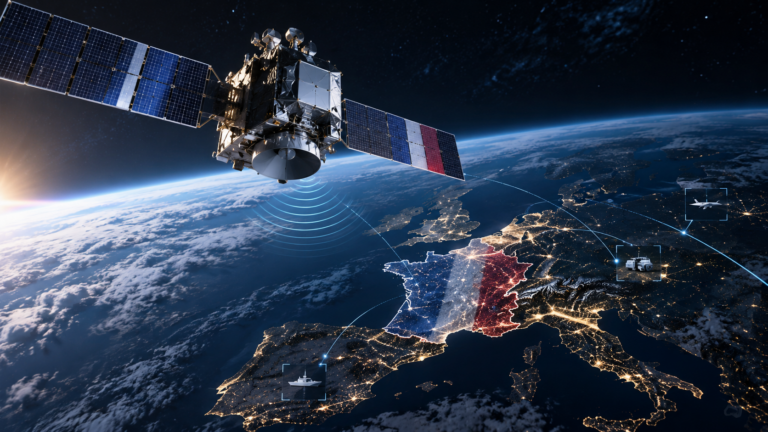
Artificial intelligence is rapidly becoming a critical component of military cyber defence. As defence networks expand across increasingly complex operational environments, AI driven security architectures are enabling faster threat detection, greater resilience, and improved decision support across the digital battlespace.
The Growing Complexity of Defence Networks
Modern military operations are fundamentally dependent upon data. From command and control systems to logistics platforms, intelligence gathering, sensor integration, and battlefield communications, defence organisations now operate within highly interconnected digital ecosystems. The challenge is that these networks are becoming larger, more distributed, and significantly more complex. Traditional military communications infrastructure has evolved into an environment where fixed headquarters, tactical operations centres, mobile command posts, deployed forces, unmanned systems, and coalition partners all require access to trusted information in near real time.
This transformation has created unprecedented opportunities for operational effectiveness, but it has also expanded the potential attack surface available to adversaries. Defence organisations are therefore confronting a dual challenge. Networks must remain highly accessible to authorised users while simultaneously maintaining resilience against increasingly sophisticated cyber threats. Conventional approaches to network monitoring and defence are often unable to process the volume of data generated across modern military architectures.
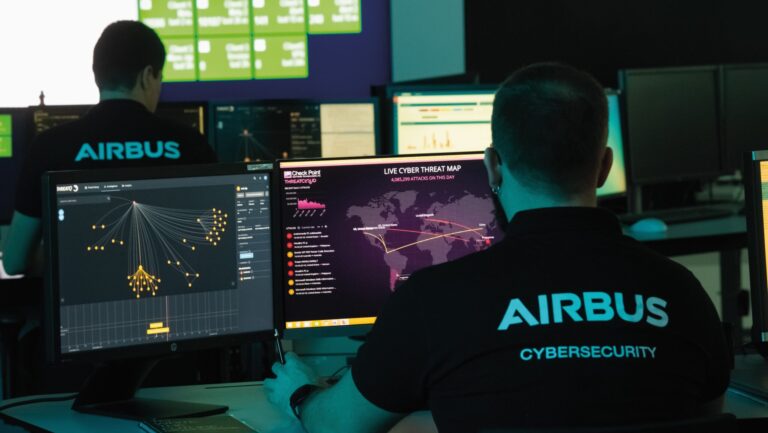
Artificial intelligence is emerging as one of the most promising technologies for addressing this challenge. Rather than replacing human operators, AI is increasingly being used to enhance cyber situational awareness, accelerate threat detection, and support decision making across defence networks. The objective is not autonomous cyber warfare, but intelligent assistance that enables security teams to identify and respond to threats more effectively.
Moving Beyond Signature Based Security
Traditional cyber security systems have historically relied heavily on known signatures and predefined rules to identify malicious activity. While these approaches remain valuable, they can struggle to detect novel attack methods, insider threats, or highly adaptive adversaries operating within military environments. Artificial intelligence offers a fundamentally different approach by analysing vast volumes of network traffic, user behaviour, system activity, and operational data to establish behavioural baselines. Once these patterns are understood, anomalies can be identified far more rapidly than would be possible through manual monitoring or conventional rule-based systems.
In defence environments, where operational tempo often generates substantial data volumes, this capability is particularly valuable. Organisations such as Thales have been actively developing advanced cyber security solutions that leverage artificial intelligence to improve threat visibility, network resilience, and operational awareness. The ability to detect subtle deviations from normal activity allows security teams to identify potential threats earlier within the attack cycle, reducing the time between intrusion and response. This shift from reactive security towards predictive cyber defence is becoming increasingly important as military organisations seek to stay ahead of evolving threats that are themselves becoming more automated, adaptive, and sophisticated.
The Importance of Trusted Infrastructure
Artificial intelligence can only be effective when supported by robust digital infrastructure. Defence networks frequently operate in harsh and contested environments where reliability is paramount. Whether deployed aboard military vehicles, within tactical command centres, or across expeditionary operations, computing systems must deliver secure performance under demanding conditions. This requirement has increased focus on ruggedised computing platforms and secure network architectures capable of supporting AI enabled workloads at the tactical edge.
Companies such as Klas Group have built their reputation around deployable communications and computing solutions specifically designed for military environments. As AI applications move closer to the operational edge, the ability to process data locally becomes increasingly important. Edge computing reduces dependency on centralised infrastructure and allows critical decisions to be supported even when communications are degraded, disrupted, or contested.
This capability aligns closely with emerging military concepts that emphasise distributed operations, mission command, and greater resilience across the battlespace. The future defence network is unlikely to rely solely on centralised data centres. Instead, intelligence processing will increasingly occur across multiple layers of the operational architecture, enabling commanders to maintain situational awareness even in highly contested environments.
Secure Electronics as the Foundation of Cyber Resilience
While software often dominates discussions surrounding artificial intelligence, hardware security remains equally important. Advanced cyber defence systems require secure electronic architectures capable of supporting high performance processing while maintaining operational integrity throughout their service life. Manufacturers such as Elma Electronic play an important role in providing rugged computing platforms, embedded systems, and mission critical hardware designed specifically for defence applications. These technologies form part of the infrastructure that enables secure data processing in demanding operational environments.
As military systems become increasingly interconnected, hardware assurance is receiving greater attention from defence procurement organisations. Supply chain security, system integrity, electromagnetic protection, and component reliability all contribute to overall cyber resilience. Artificial intelligence may improve detection and response capabilities, but the underlying hardware must remain trusted throughout its operational lifecycle. This growing focus on trusted infrastructure reflects the reality that cyber security is no longer solely a software challenge. It is increasingly viewed as a system wide requirement encompassing hardware, software, networks, operational procedures, and human operators working together within a unified security framework.
Connectivity in Contested Environments
One of the most significant challenges facing military networks is maintaining connectivity during operations. Modern forces rely on a wide range of communications technologies to exchange information between platforms, headquarters, and deployed personnel. Any disruption to these connections can affect operational effectiveness and potentially degrade mission outcomes. The growing use of AI driven cyber security solutions places additional importance on maintaining reliable data exchange across networks.
Manufacturers such as ODU contribute to this ecosystem through advanced connectivity solutions that support secure communications in demanding defence environments. High reliability interconnect technologies play a critical role in ensuring that data can move efficiently between systems without compromising security, performance, or reliability. As operational concepts continue to evolve, military networks are expected to become increasingly dynamic, connecting sensors, vehicles, command systems, and personnel across diverse operating environments. Artificial intelligence depends upon data availability and quality. Consequently, resilient connectivity remains a fundamental requirement for future cyber defence architectures capable of supporting real time decision making.
Intelligence Fusion and Situational Awareness
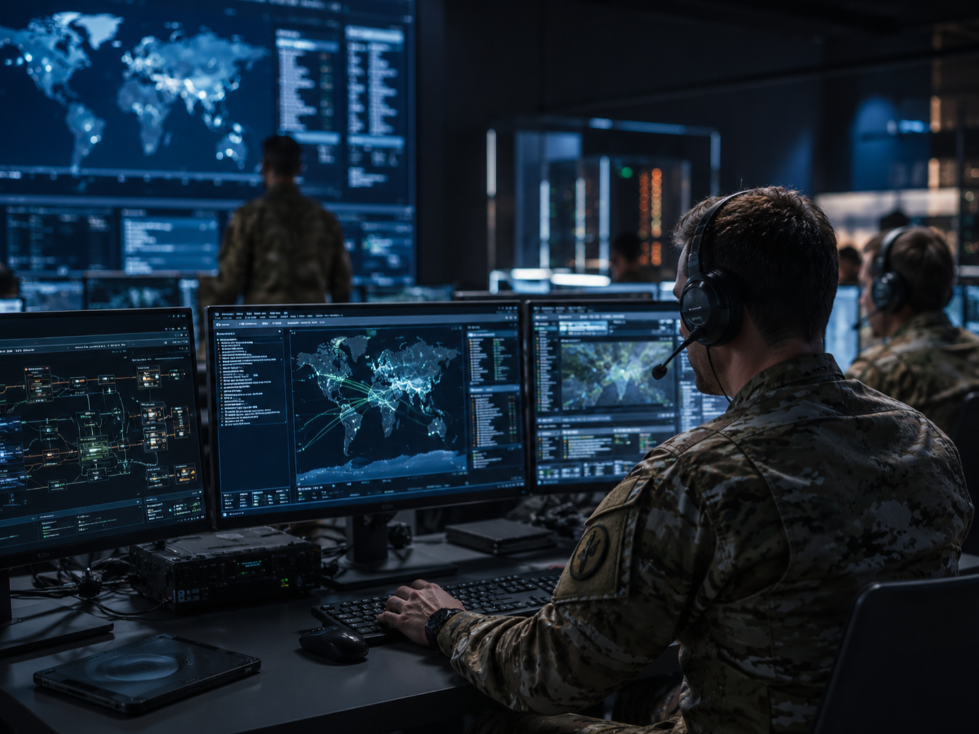
The true value of artificial intelligence lies not simply in identifying threats, but in helping operators understand them. Defence organisations increasingly collect information from multiple sources including network sensors, intelligence platforms, operational systems, surveillance assets, and communications infrastructure. The challenge is converting this enormous volume of data into actionable insight that commanders can use effectively.
AI enabled analytics can help correlate information from different sources and identify relationships that may otherwise remain hidden. This capability is becoming particularly important within multi domain operations where cyber activity may influence or support actions across land, sea, air, space, and electromagnetic environments. Companies within the defence technology sector, including Cohort plc and its specialist subsidiaries, continue to support the development of advanced information processing, electronic warfare, surveillance, and intelligence capabilities that contribute to broader situational awareness. The ability to fuse data rapidly and present meaningful information to commanders can significantly improve decision making during complex operations. Rather than overwhelming personnel with raw data, AI systems can help prioritise information, identify patterns, and highlight areas requiring immediate attention.
Zero Trust and the Future of Military Network Security
As defence networks become increasingly distributed, traditional perimeter based security models are proving insufficient for modern operational requirements. Historically, military organisations relied on heavily protected network boundaries, with the assumption that users and devices operating within those boundaries could generally be trusted. However, the growth of cloud environments, remote access requirements, coalition operations, and tactical edge computing has fundamentally changed this model.
The concept of Zero Trust is gaining momentum across defence organisations worldwide. Rather than automatically trusting users or systems based on their location within a network, Zero Trust architectures continuously verify identities, devices, permissions, and behaviour before granting access to information or services. Artificial intelligence is increasingly becoming a critical enabler of this approach. Machine learning algorithms can continuously analyse user activity, device health, access patterns, and network behaviour to identify unusual activity that may indicate compromise. For military organisations, this capability is particularly valuable because operational environments rarely remain static. Personnel, systems, and communications pathways may change rapidly during deployments, coalition operations, or crisis response activities. Technologies developed by organisations such as Thales increasingly support these evolving security frameworks, helping military organisations balance accessibility with protection while maintaining operational agility.
Coalition Operations and AI Enabled Interoperability
Modern military operations are increasingly conducted within multinational environments. Whether operating through NATO frameworks, regional security partnerships, or coalition task forces, defence organisations must be capable of exchanging information securely across multiple networks and jurisdictions. This requirement introduces significant technical complexity because different nations often employ varying communications systems, security policies, data formats, and network architectures.
Artificial intelligence offers several potential advantages in this area. Advanced analytics can help automate data classification, improve information sharing workflows, identify security risks, and support the rapid integration of disparate information sources. AI can also assist operators in managing the large volumes of data generated during coalition operations, reducing the burden on personnel while improving situational awareness. Companies including Cohort plc, Klas Group, ODU, and Elma Electronic operate within technology areas that support broader interoperability objectives, providing elements of the infrastructure required for secure and resilient information exchange. As defence organisations continue to pursue multi domain operational concepts, the ability to move information rapidly and securely between allied partners will become increasingly important.
Cyber Resilience in Contested Electromagnetic Environments
Future military operations are expected to occur in environments where communications and digital systems face persistent disruption. Electronic warfare, jamming, spectrum congestion, and cyber attacks may all affect the availability of network services. As a result, resilience has become a defining requirement for next generation defence networks. Artificial intelligence can contribute significantly to this objective by supporting adaptive network management and helping operators maintain operational effectiveness despite disruption.
AI driven network management systems can automatically identify degraded communications pathways, prioritise critical traffic, and recommend alternative routing options. In some cases, systems may be able to reconfigure portions of the network autonomously to maintain operational effectiveness. This capability becomes particularly important when forces are operating at the tactical edge, where connectivity may be intermittent or contested. Ruggedised computing solutions, resilient communications infrastructure, and trusted electronic systems remain essential components of this architecture. Organisations such as Panasonic, Klas Group, Elma Electronic, and ODU all contribute technologies that support the broader objective of maintaining information availability in challenging operational environments. Ultimately, resilience is becoming just as important as security. A network that remains protected but unavailable offers little operational value, making continuity of operations a central consideration in future cyber architecture design.
Building Trust in AI Enabled Defence Networks
The discussion surrounding artificial intelligence often focuses on future possibilities. Within defence cyber operations, however, the priority remains practical implementation. Military organisations require technologies that can operate reliably under real world conditions, integrate with existing systems, and support operational decision making without introducing unacceptable risk.
Artificial intelligence is increasingly demonstrating value in threat detection, anomaly identification, intelligence fusion, network management, and operational awareness. Yet its success ultimately depends upon the strength of the broader digital ecosystem supporting it. Trusted infrastructure, resilient communications, secure electronics, and skilled operators remain fundamental requirements. Companies such as Thales, Cohort plc, Panasonic, Elma Electronic, ODU, and Klas Group contribute to different layers of this evolving ecosystem, from cyber security and secure infrastructure to rugged computing, connectivity, and deployable communications.
As defence networks continue to expand in scale and complexity, artificial intelligence will play an increasingly important role in protecting critical information and enabling operational advantage. The future of military cyber defence will not be defined by AI alone. It will be defined by how effectively artificial intelligence is integrated into a resilient, secure, and trusted network architecture capable of supporting modern military operations across every domain.