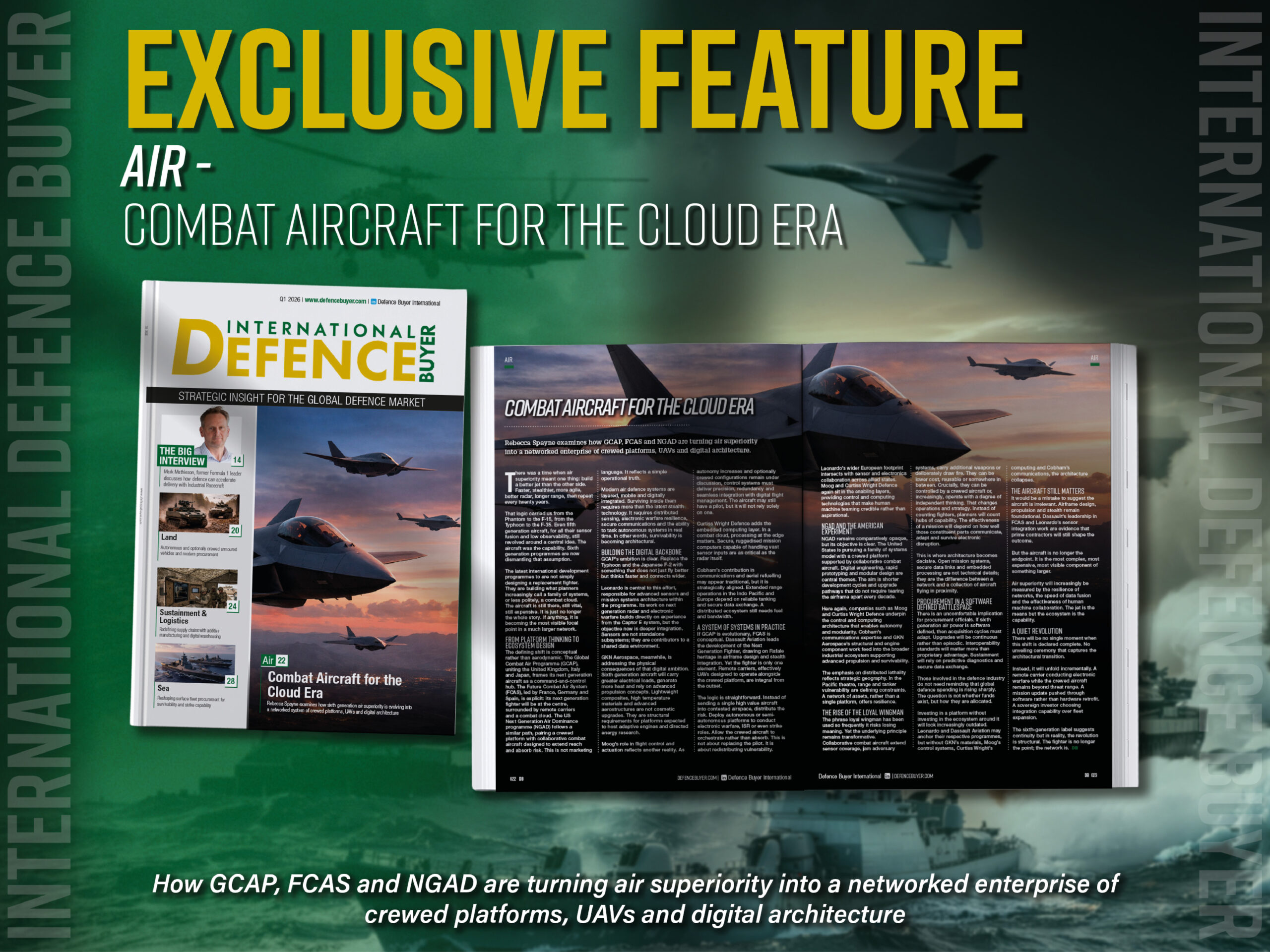

Rebecca Spayne examines how GCAP, FCAS and NGAD are turning air superiority into a networked enterprise of crewed platforms, UAVs and digital architecture.
There was a time when air superiority meant one thing: build a better jet than the other side. Faster, stealthier, more agile, better radar, longer range, then repeat every twenty years.
That logic carried us from the Phantom to the F-15, from the Typhoon to the F-35. Even fifth generation aircraft, for all their sensor fusion and low observability, still revolved around a central idea. The aircraft was the capability. Sixth generation programmes are now dismantling that assumption.
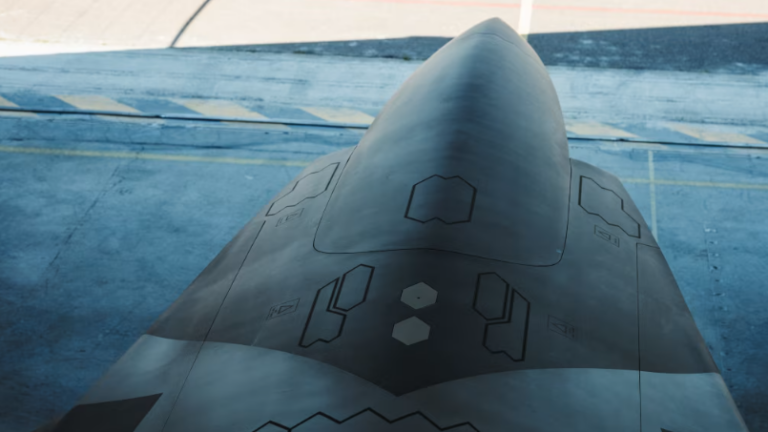
The latest international development programmes to are not simply designing a replacement fighter. They are building what planners increasingly call a family of systems, or less politely, a combat cloud. The aircraft is still there, still vital, still expensive. It is just no longer the whole story. If anything, it is becoming the most visible focal point in a much larger network.
From Platform Thinking to Ecosystem Design
The defining shift is conceptual rather than aerodynamic. The Global Combat Air Programme (GCAP), uniting the United Kingdom, Italy and Japan, frames its next generation aircraft as a command-and-control hub. The Future Combat Air System (FCAS), led by France, Germany and Spain, is explicit: its next generation fighter will be at the centre, surrounded by remote carriers and a combat cloud. The US Next Generation Air Dominance programme (NGAD) follows a similar path, pairing a crewed platform with collaborative combat aircraft designed to extend reach and absorb risk. This is not marketing language. It reflects a simple operational truth.
Modern air defence systems are layered, mobile and digitally integrated. Surviving inside them requires more than the latest stealth technology. It requires distributed sensing, electronic warfare resilience, secure communications and the ability to task autonomous systems in real time. In other words, survivability is becoming architectural.
Building the Digital Backbone
GCAP’s ambition is clear. Replace the Typhoon and the Japanese F-2 with something that does not just fly better but thinks faster and connects wider.
Leonardo is central to this effort, responsible for advanced sensors and mission systems architecture within the programme. Its work on next generation radar and electronic warfare builds directly on experience from the Captor E system, but the objective now is deeper integration. Sensors are not standalone subsystems; they are contributors to a shared data environment.
GKN Aerospace, meanwhile, is addressing the physical consequences of that digital ambition. Sixth generation aircraft will carry greater electrical loads, generate more heat and rely on advanced propulsion concepts. Lightweight composites, high temperature materials and advanced aerostructures are not cosmetic upgrades. They are structural requirements for platforms expected to host adaptive engines and directed energy research.
Moog’s role in flight control and actuation reflects another reality. As autonomy increases and optionally crewed configurations remain under discussion, control systems must deliver precision, redundancy and seamless integration with digital flight management. The aircraft may still have a pilot, but it will not rely solely on one.
Curtiss Wright Defence adds the embedded computing layer. In a combat cloud, processing at the edge matters. Secure, ruggedised mission computers capable of handling vast sensor inputs are as critical as the radar itself.
Cobham’s contribution in communications and aerial refuelling may appear traditional, but it is strategically aligned. Extended range operations in the Indo Pacific and Europe depend on reliable tanking and secure data exchange. A distributed ecosystem still needs fuel and bandwidth.
A System of Systems in Practice
If GCAP is evolutionary, FCAS is conceptual. Dassault Aviation leads the development of the Next Generation Fighter, drawing on Rafale heritage in airframe design and stealth integration. Yet the fighter is only one element. Remote carriers, effectively UAVs designed to operate alongside the crewed platform, are integral from the outset.
The logic is straightforward. Instead of sending a single high value aircraft into contested airspace, distribute the risk. Deploy autonomous or semi-autonomous platforms to conduct electronic warfare, ISR or even strike roles. Allow the crewed aircraft to orchestrate rather than absorb. This is not about replacing the pilot. It is about redistributing vulnerability.
Leonardo’s wider European footprint intersects with sensor and electronics collaboration across allied states. Moog and Curtiss Wright Defence again sit in the enabling layers, providing control and computing technologies that make human machine teaming credible rather than aspirational.
Barzan Holdings represents a different but relevant dimension. As Qatar’s defence investment arm, Barzan has focused on building sovereign capability through partnerships and technology transfer. In a world where combat air is an ecosystem, participation in electronics, systems integration and sustainment chains may be more strategically valuable than purchasing a finished jet. Industrial positioning is becoming as important as procurement in global military operations…
Read the full article here