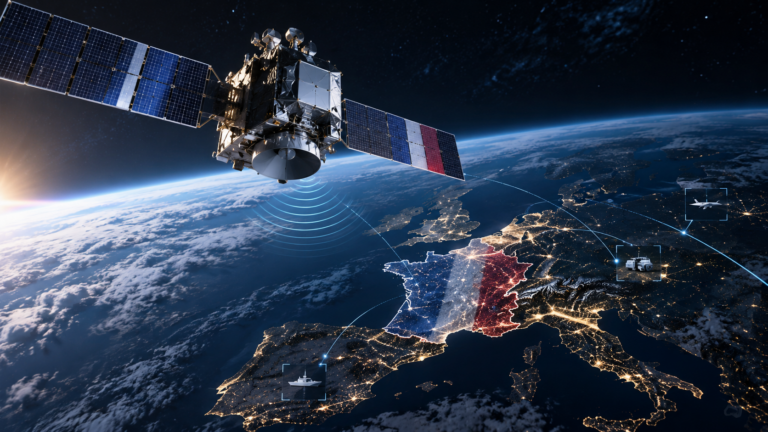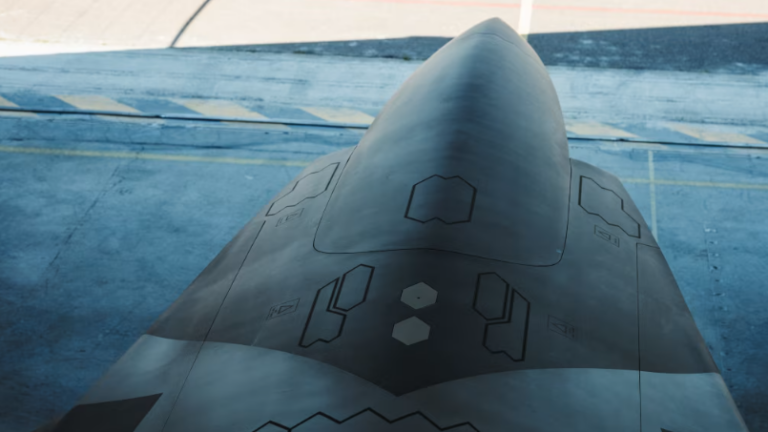
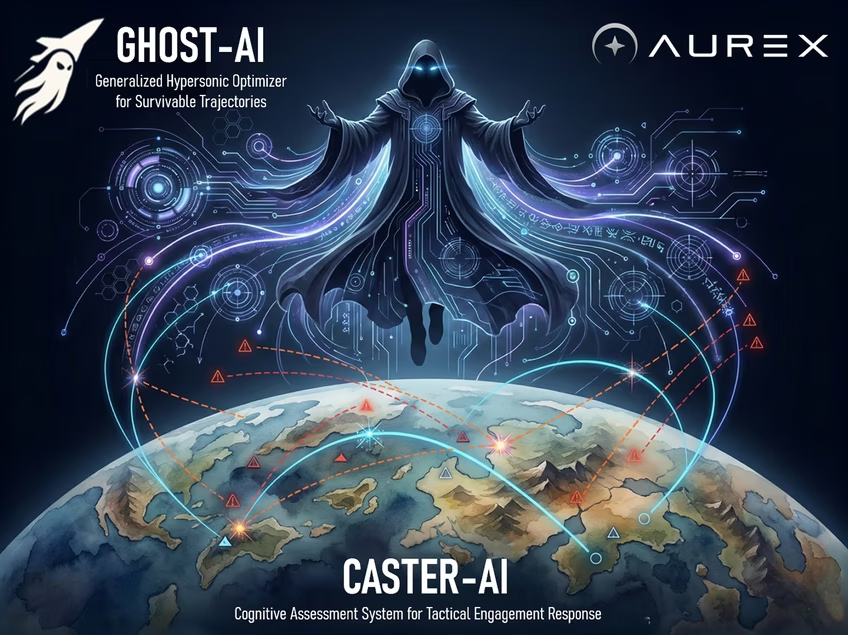

Aurex, a mission-focused aerospace and defense company building the next frontier of deterrence, announced advancements in GHOST-AI and CASTER-AI, further amplifying Aurex’s ability to explore how AI can improve both hypersonic vehicle-level performance and mission-level battle-management decisions.
GHOST-AI, or Generalized Hypersonic Optimizer for Survivable Trajectories – AI, and CASTER-AI, or Cognitive Assessment System for Tactical Engagement Response – AI, come at a time when demand is growing for AI-enabled battle management, hypersonics, fire-control decision support, pre-mission planning, and defensive system performance assessment.
“Aurex is using AI not only to discover solutions, but also to translate those insights into explainable, testable algorithms for future guidance, battle-management, and fire-control applications,” said Warren Kohm, CEO of Aurex. “We don’t wait until the need arises. Engineering the edge of possible means our team is constantly defining what’s next and designing solutions before they’re required. We’re excited about the advancements in GHOST-AI and CASTER-AI and look forward to helping our customers stay mission ready.”
GHOST-AI: Built for Complex Missions
GHOST-AI uses reinforcement learning to train agents across broad and varied simulated conditions, enabling adaptable guidance, navigation, control, and behaviors for survivable trajectory optimization.
Key differentiator:
-
GHOST-AI agents guide simulated hypersonic vehicles to survive a wide variety of scenarios without the need for mission-specific pretraining.
CASTER-AI: When Decision Making Matters Most
Aurex has also further developed CASTER-AI, which applies AI at the battle-management level for tactical engagement response, dynamic resource-target pairing, strike-package planning, pre-mission planning, system performance assessments, and fire-control decision support.
Key differentiator:
-
CASTER-AI incorporates GHOST-AI agents to guide simulated hypersonic vehicles, cruise missiles and other munitions, linking adaptive vehicle behavior with mission-level battle-management decisions.
“As real-world battle environments become increasingly complex, our capabilities and products must evolve to meet those challenges with greater speed, intelligence, and adaptability,” said John Robertson, VP of Innovation and Research, Aurex. “Aurex’s long-term vision is supported by technologies that help customers move faster, understand complex threats and missions, and develop next-generation defense capabilities. AI-enabled hypersonic guidance, battle-management analysis, fire-control decision support, and AI-to-algorithm transition all support that mission.”
With both advanced AI capabilities, Aurex is giving customers and mission partners a way to explore complex mission behavior earlier and across more conditions. Together, they enable battle simulations in which CASTER-AI evaluates mission-level decisions while GHOST-AI agents guide simulated hypersonic vehicles, supporting applications in pre-mission planning, defensive system performance assessment, and potential future real-time decision support.