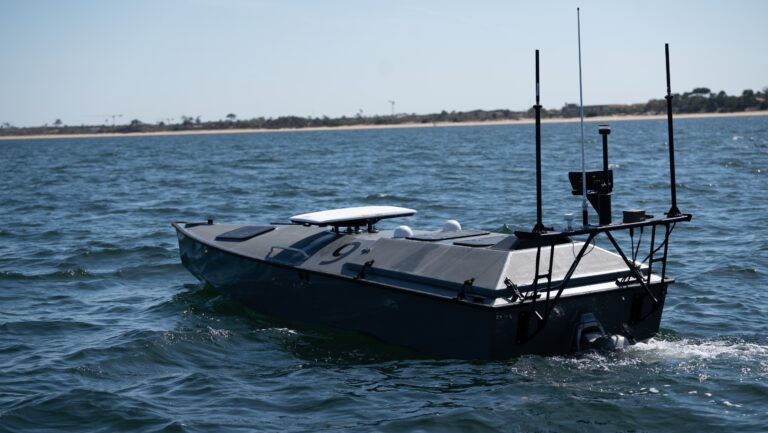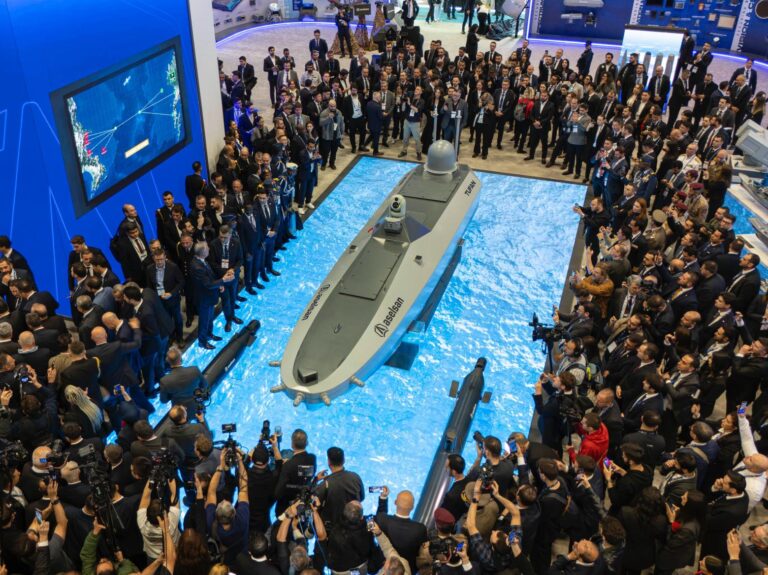


Lockheed Martin and Saildrone have demonstrated the launch of two rounds from an unmanned surface vessel during RIMPAC 2026, as the companies explore how commercial autonomous platforms could be adapted for naval combat operations.
A Saildrone Surveyor-class unmanned surface vessel was integrated with Lockheed Martin’s Joint-Air-to-Ground Missile Dual Launcher and the US Navy’s Adjunct Remote Engagement System, known as ARES.
The demonstration was conducted near Hawaii under the US Navy Fleet Experimentation Program during Exercise Rim of the Pacific 2026.
USV Demonstrates Remote Engagement Capability
During the exercise, the Saildrone platform operated alongside the USS Theodore Roosevelt Carrier Strike Group and used targeting information to engage a surrogate high-speed surface craft.
Lockheed Martin said the programme progressed from concept to demonstration within six months, using established defence technologies integrated onto a commercially developed unmanned vessel.
The platform also demonstrated passive electronic warfare capabilities. Working alongside an MH-60S helicopter, the Saildrone detected, classified and identified a surrogate threat radar during the multi-domain exercise.
Further Unmanned Naval Trials Planned
Lockheed Martin and Saildrone are planning additional demonstrations using unmanned surface vessels integrated with US Navy combat systems.
Future work is expected to include Saildrone’s larger Spectre-class platform, which is being developed to accommodate containerised systems including Lockheed Martin’s Mk 70 launcher and surveillance towed-array equipment.
The trial reflects broader US Navy efforts to integrate autonomous vessels into distributed maritime operations while examining how existing weapons, sensors and command-and-control systems can be deployed from uncrewed platforms.
Such systems could enable naval forces to distribute sensors and weapons across a larger operational area while reducing the requirement to expose crewed vessels to higher-risk missions.