

Anthony Heath, Director, Defence Industry, UK at Defence SA, discusses AUKUS, European partnerships and South Australia’s growing role in undersea defence.
Based at the Australian High Commission in London, Anthony Heath, Director, Defence Industry, UK at Defence SA, joined the organisation in September 2024. His role is twofold, supporting international companies considering investment in South Australia, while helping South Australian defence businesses develop opportunities across the UK and Europe.
Your role works in both directions, supporting investment into South Australia and helping South Australian companies internationally. What are you trying to achieve?
My role is to work with companies that are looking at investing in Australia and make the case for South Australia, but also to work with South Australian defence companies that are interested in broadening their footprint into the UK and Europe.
I am based at the Australian High Commission in London, but I work for Defence SA, which is an independent statutory body that supports defence industry and the wider defence ecosystem in South Australia. South Australia is quite unique in having that form of dedicated support. As well as working with companies, Defence SA is a policy generating organisation, so it also helps government shape its defence strategy.
There are really two sides to the role. We want international companies to understand the opportunities available in South Australia, but we also have South Australian companies with capabilities that are relevant internationally. It is about helping build those relationships in both directions and connecting companies with the right organisations, opportunities and markets.
How have AUKUS and the wider UK and Australia relationship changed the opportunities available to South Australian defence companies?
The UK has always been quite welcoming and engaging with Australian companies. The free trade agreement and AUKUS have made that even easier, and there is already a high degree of familiarity between the two countries that helps when companies are looking to establish themselves or develop partnerships.
Europe is a more complex proposition. There can be certain barriers to entry for Australian companies, which means our companies will normally partner with European organisations if they are looking to enter those markets. What we are seeing, however, with the rearmament of Europe and the continuing situation in Ukraine, is recognition that Europe cannot necessarily do everything by itself.
That creates opportunities for Australian companies. On the whole, they are efficient, high-quality manufacturers and relatively straightforward companies to partner with. We are seeing European companies looking towards Australian industry to help support some of those requirements, and work from Europe is increasingly finding its way to Australia.
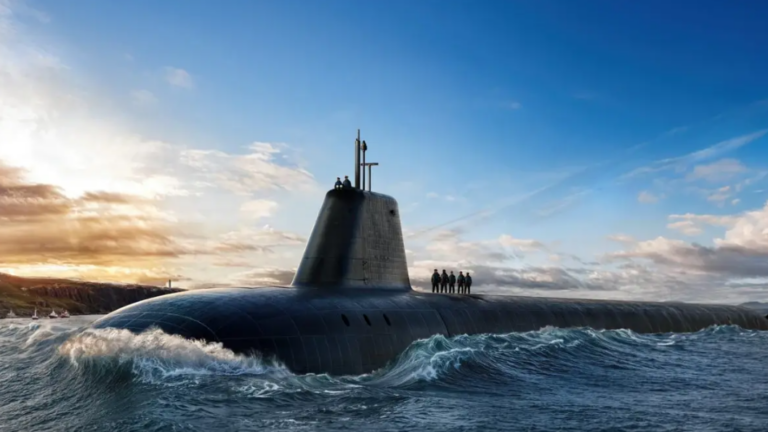
AUKUS is obviously an important part of that relationship, particularly for South Australia because of the role the state will play in Australia’s future submarine enterprise. But the opportunity is broader than a single programme. It is creating stronger industrial relationships and encouraging companies to think about how their capabilities can contribute internationally.
Why has undersea defence become such an important part of South Australia’s proposition?
Recent events have demonstrated very clearly that underwater defence capabilities are critically important. We are addressing that requirement in a number of ways, and one of them is hosting UDT Australia in Adelaide in December this year.
UDT has traditionally had a strong European and North Atlantic focus. Bringing the event to Adelaide gives us the opportunity to focus much more closely on our region and the particular requirements of Australia and the Indo Pacific. It is about helping to build expertise within the region and bringing together the organisations that are developing, operating and procuring these technologies.
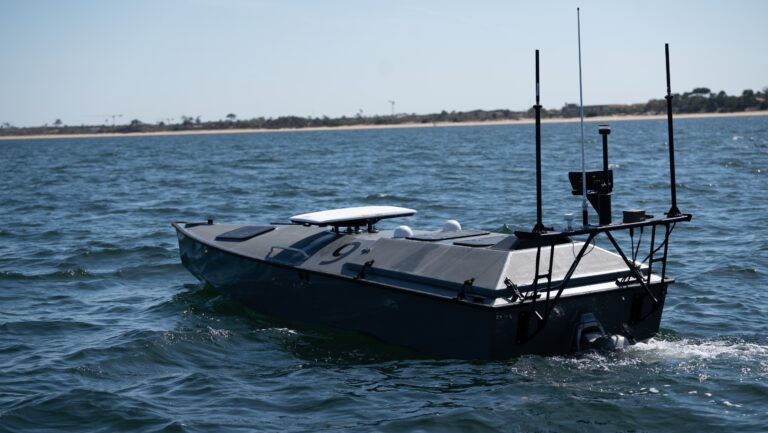
South Australia already has a significant defence ecosystem, particularly around naval capability, and that is going to continue developing. The submarine programme is obviously a major part of that, but undersea defence extends considerably further. There are autonomous systems, sensing, surveillance, communications and other technologies that are becoming increasingly important to understanding and operating within the underwater environment.